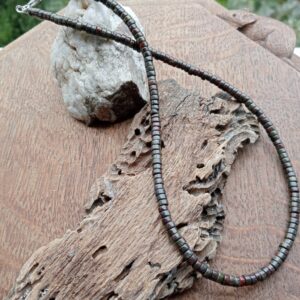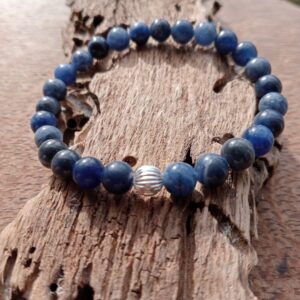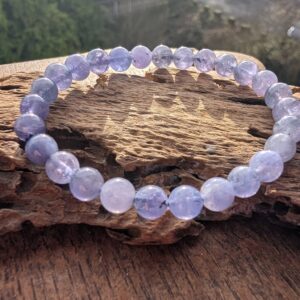


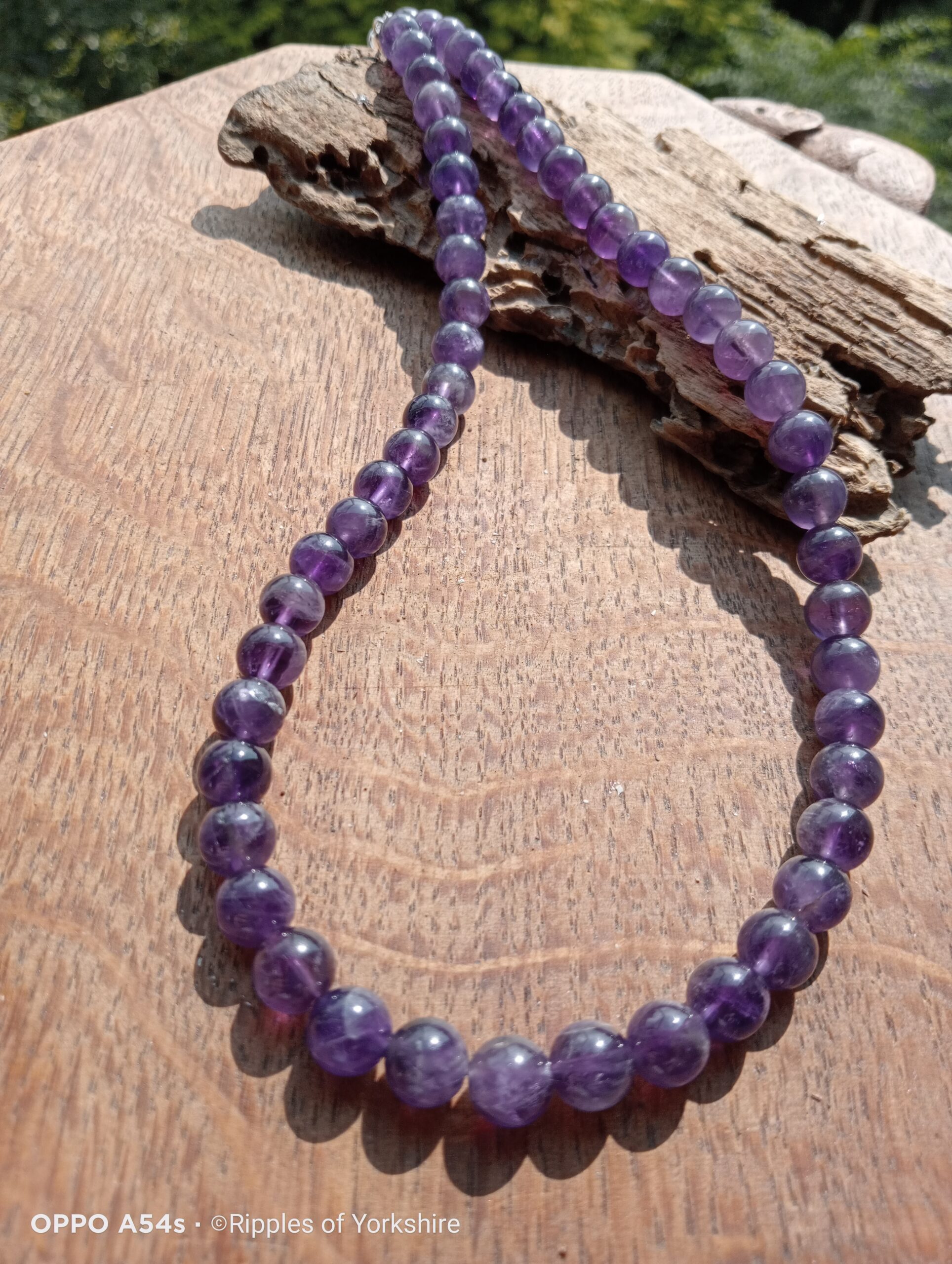
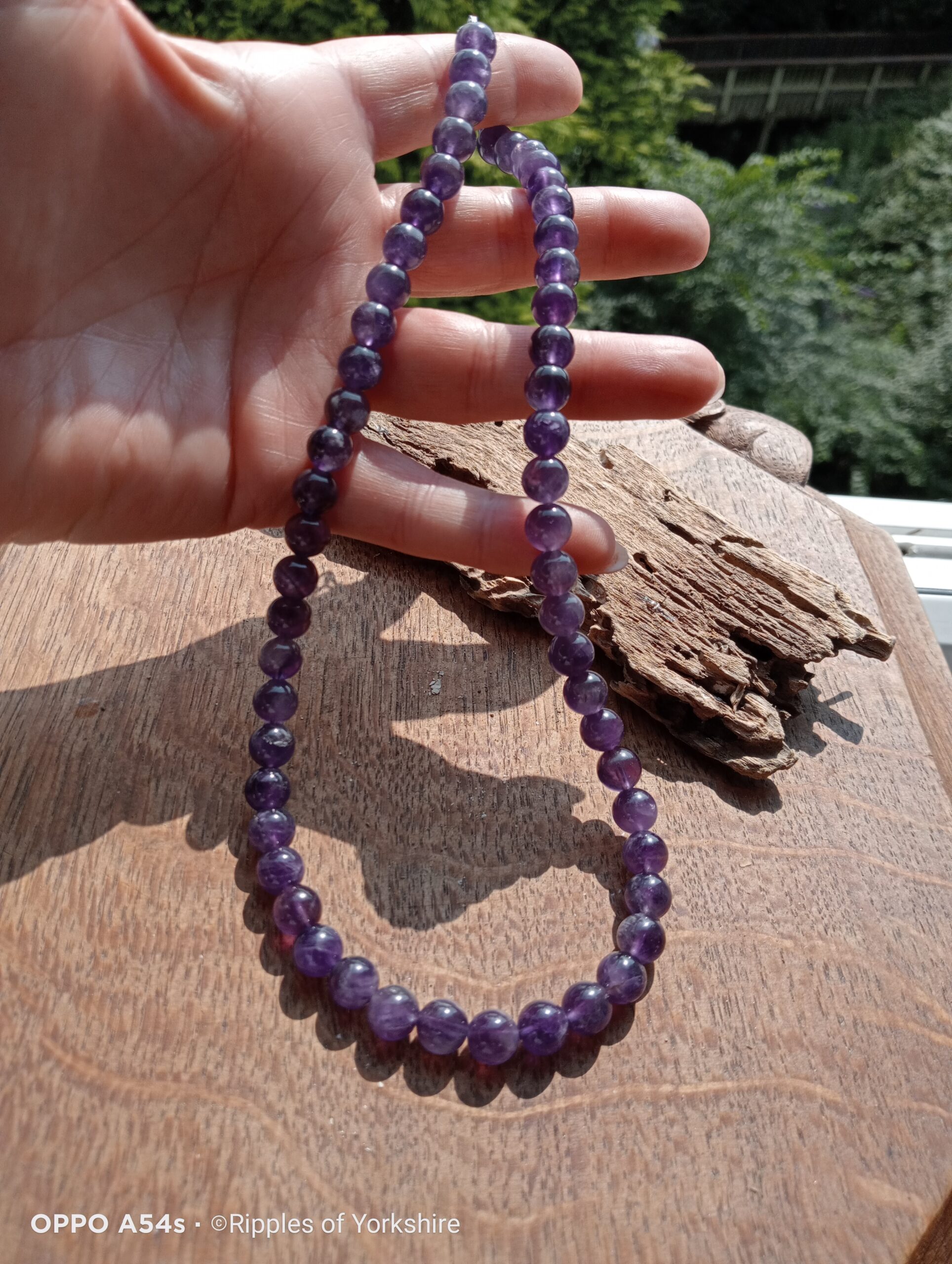

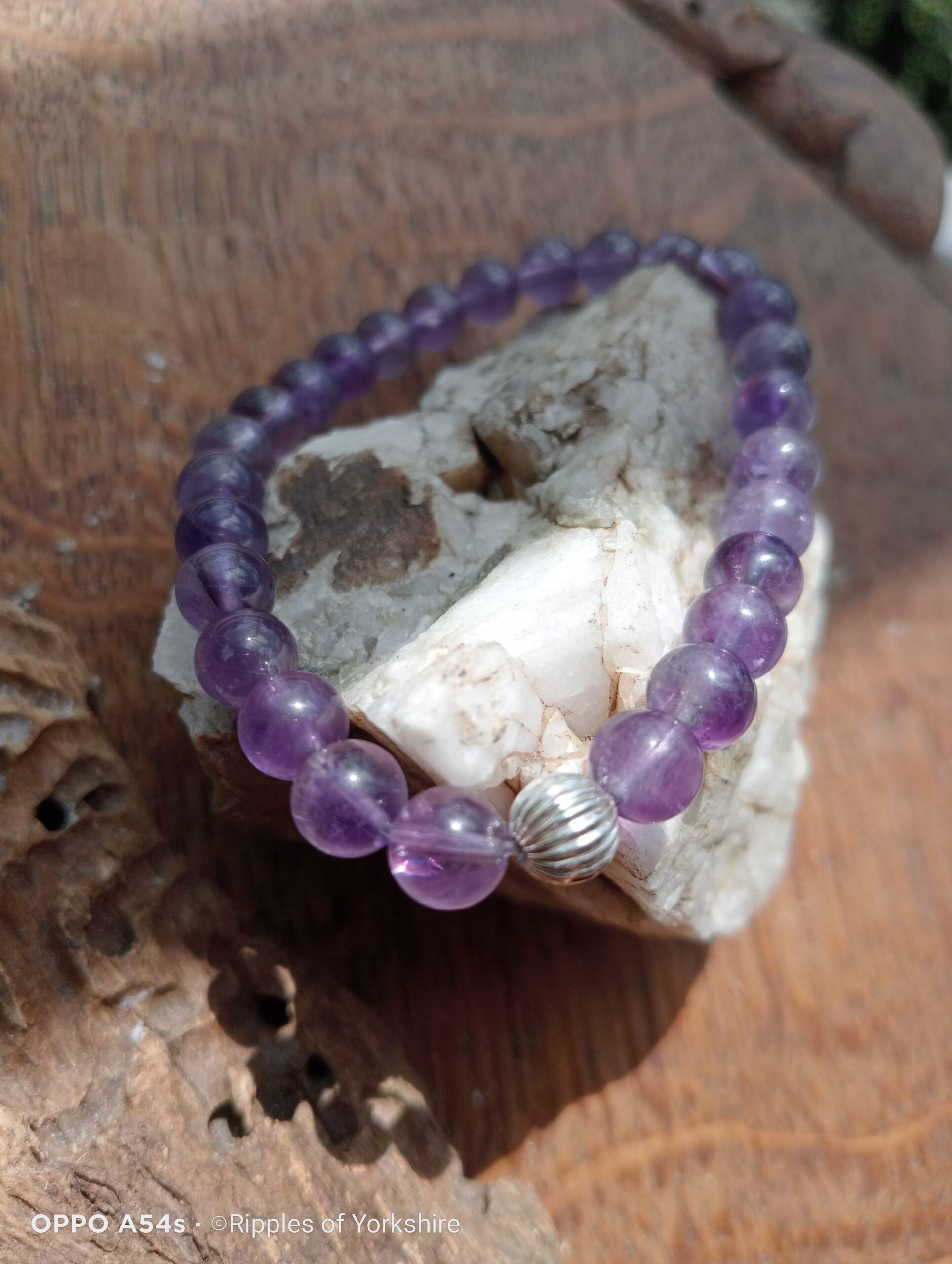
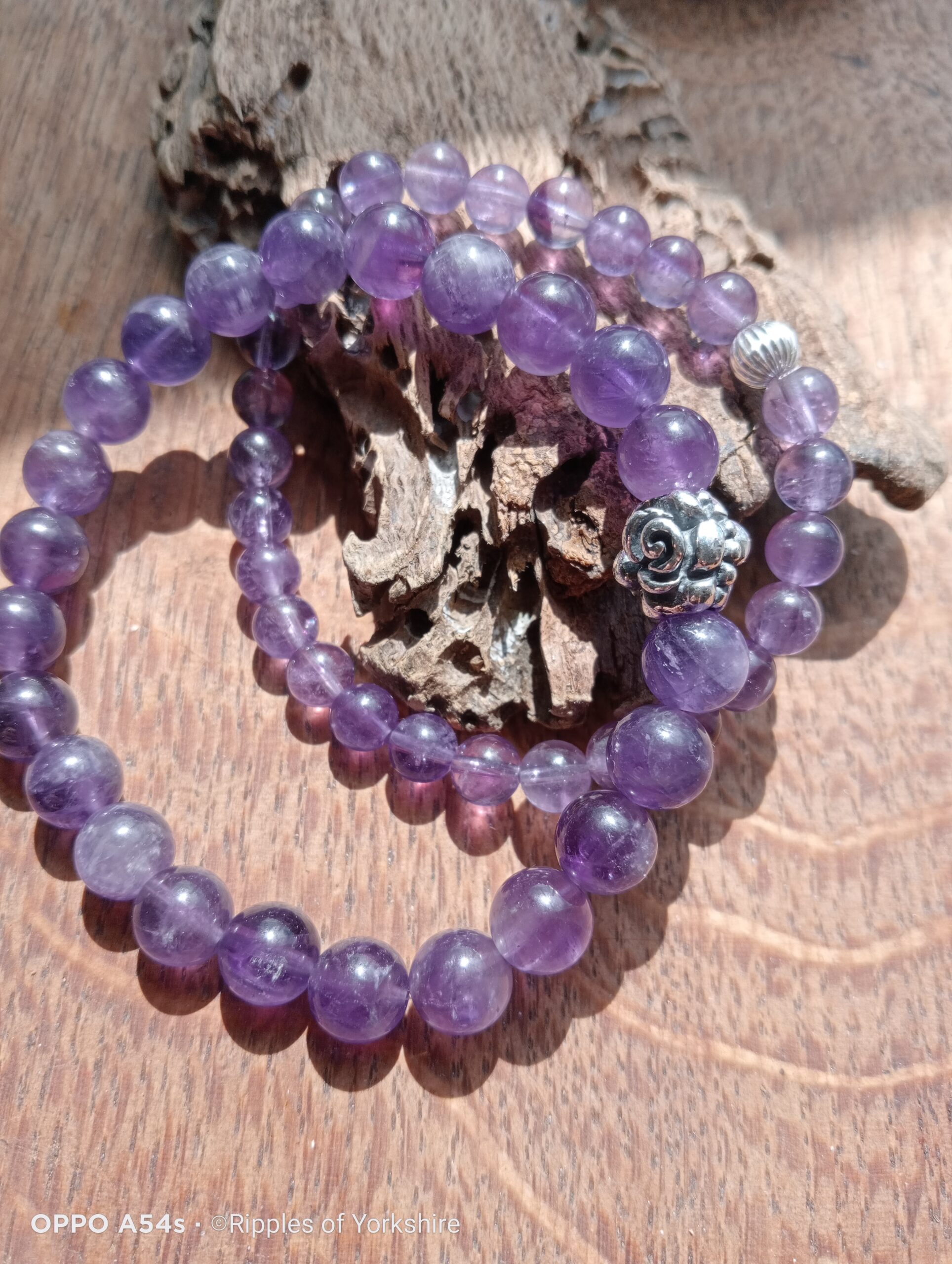
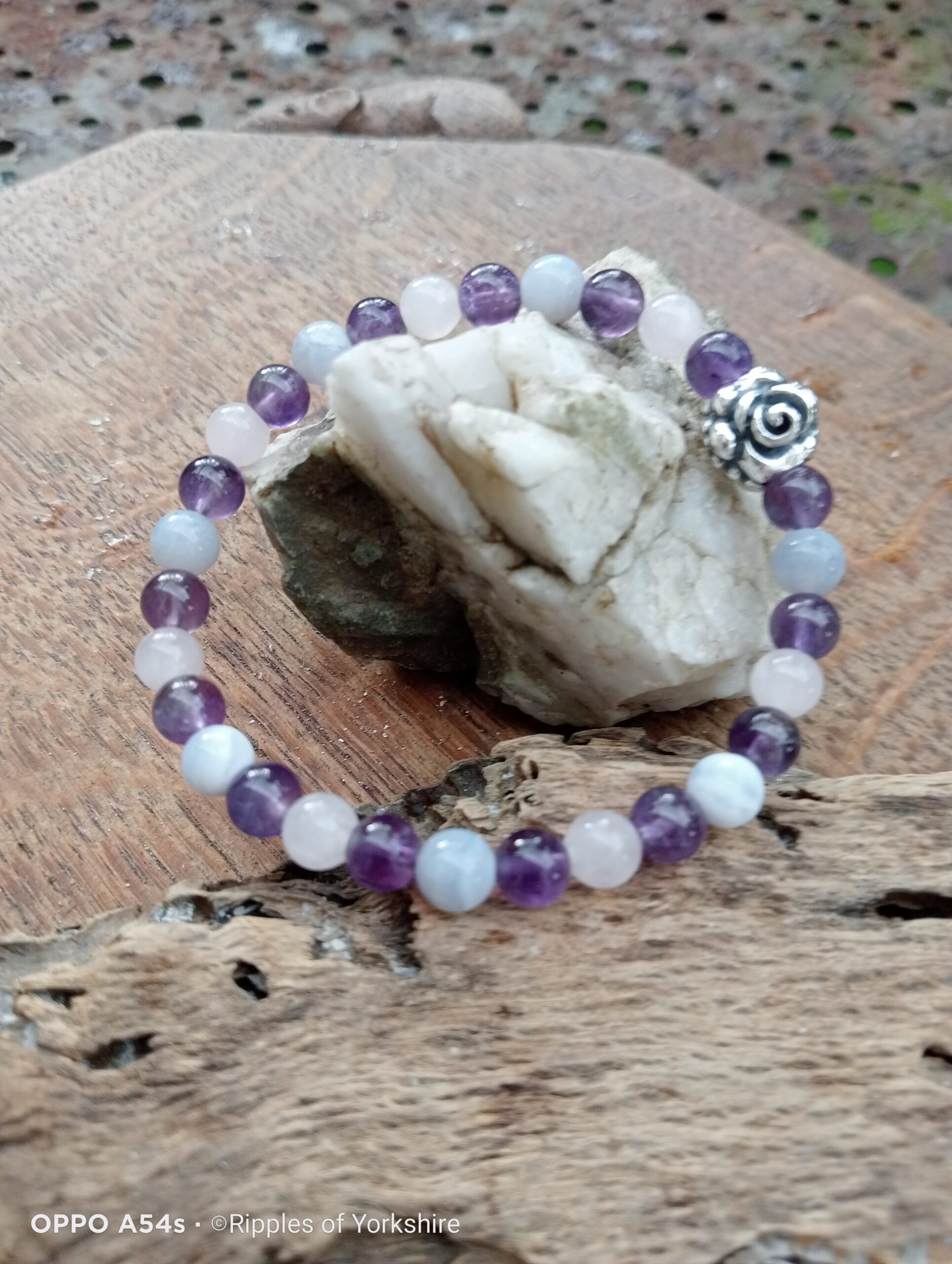
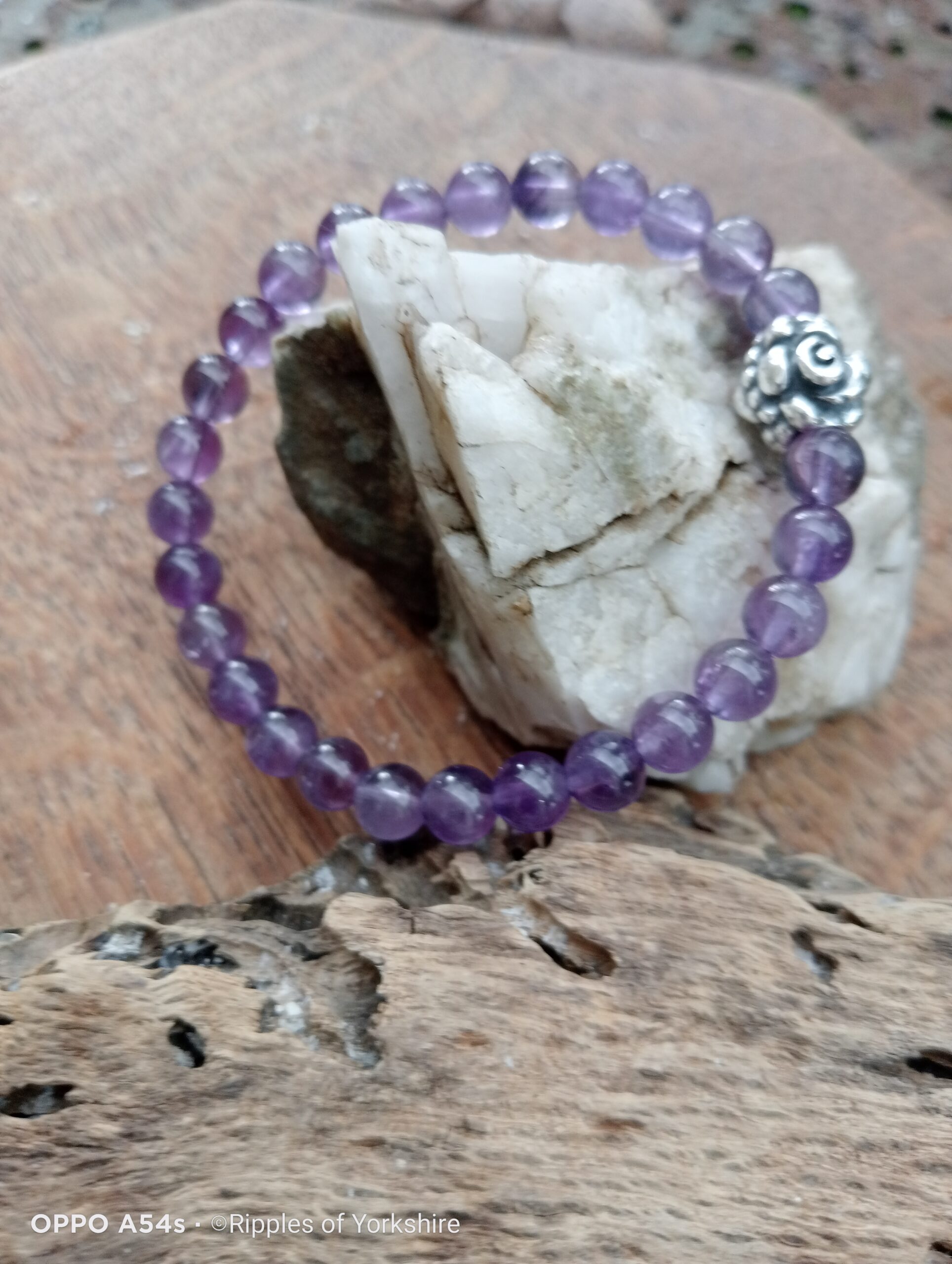
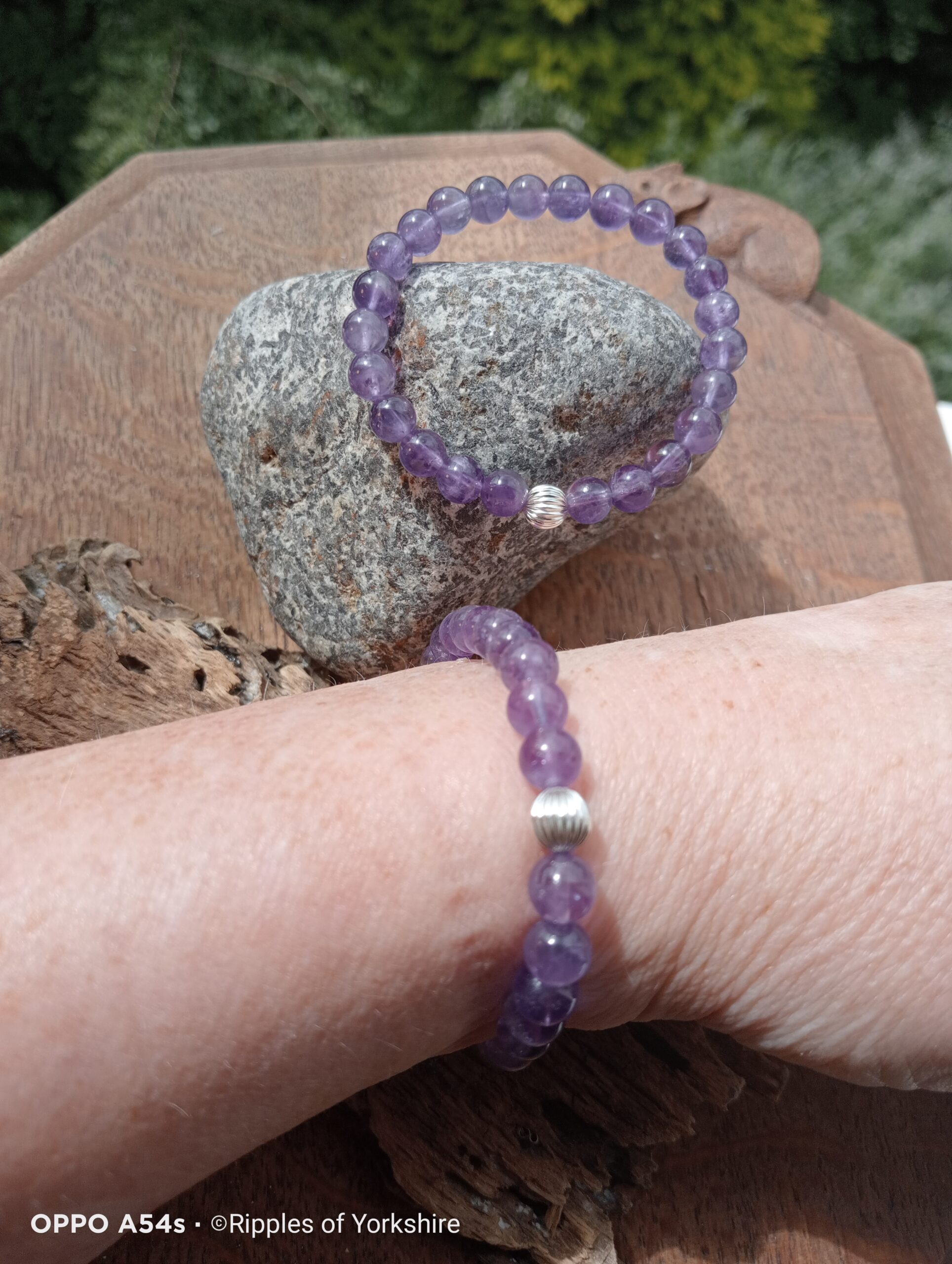


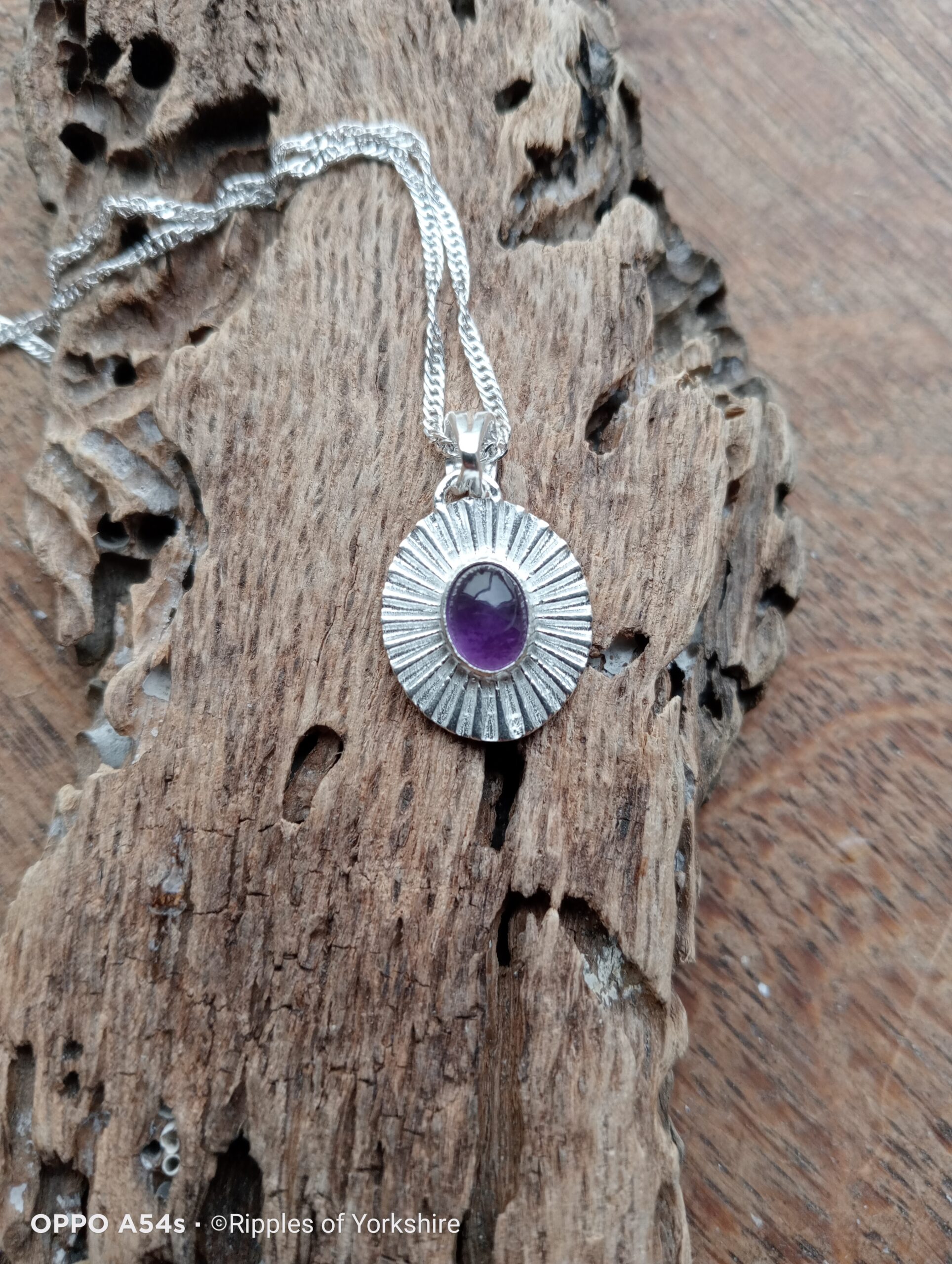


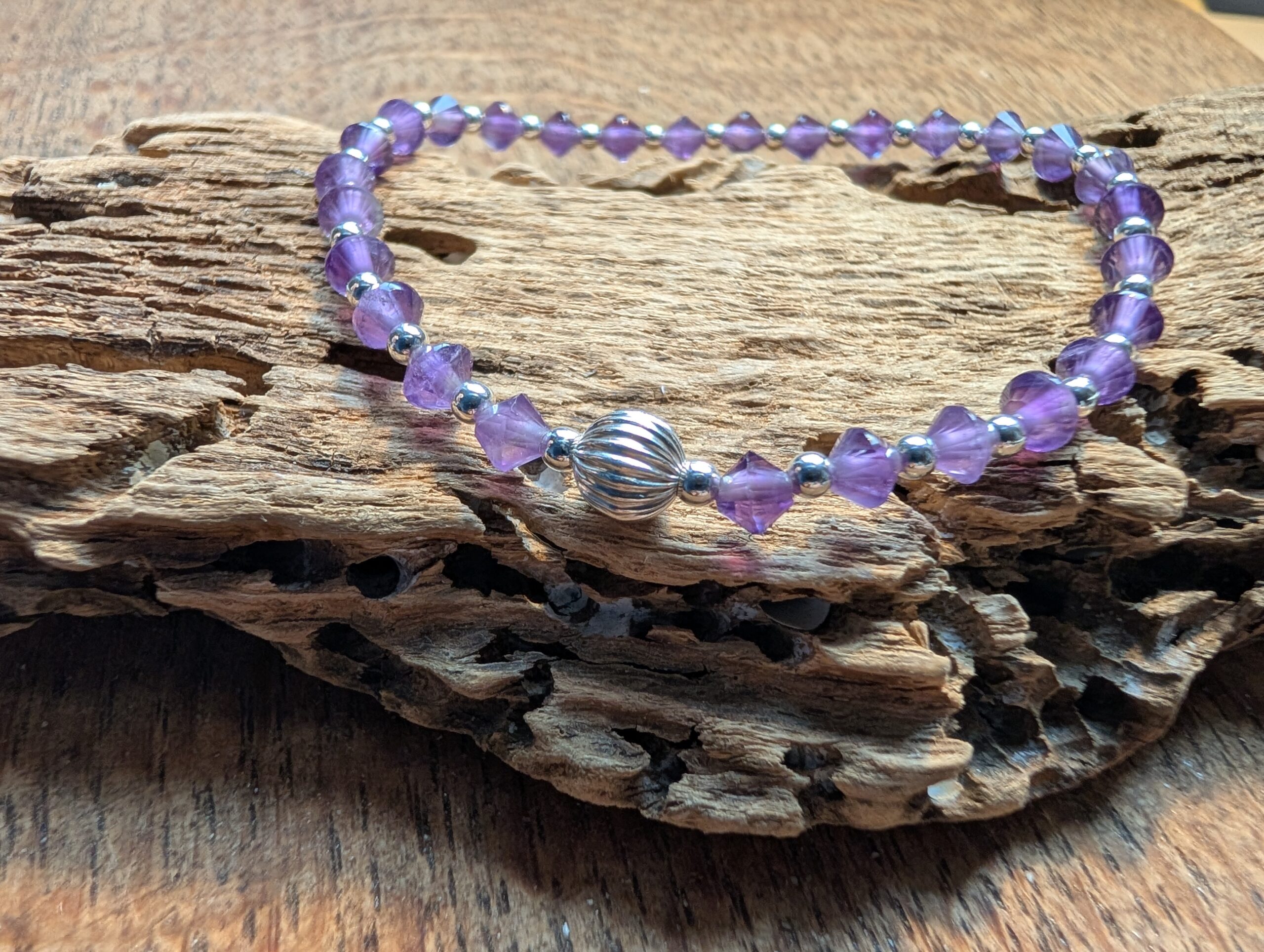


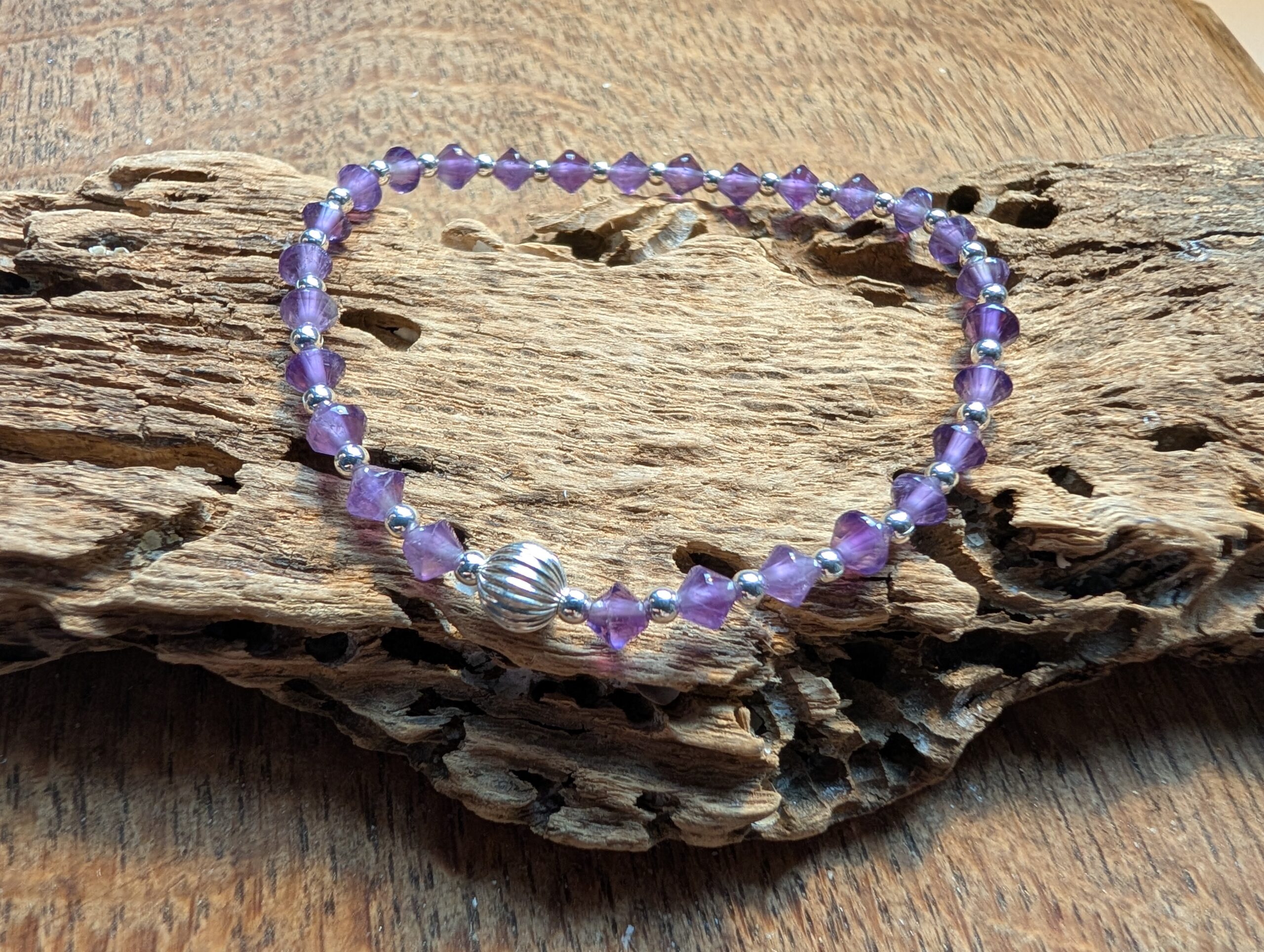

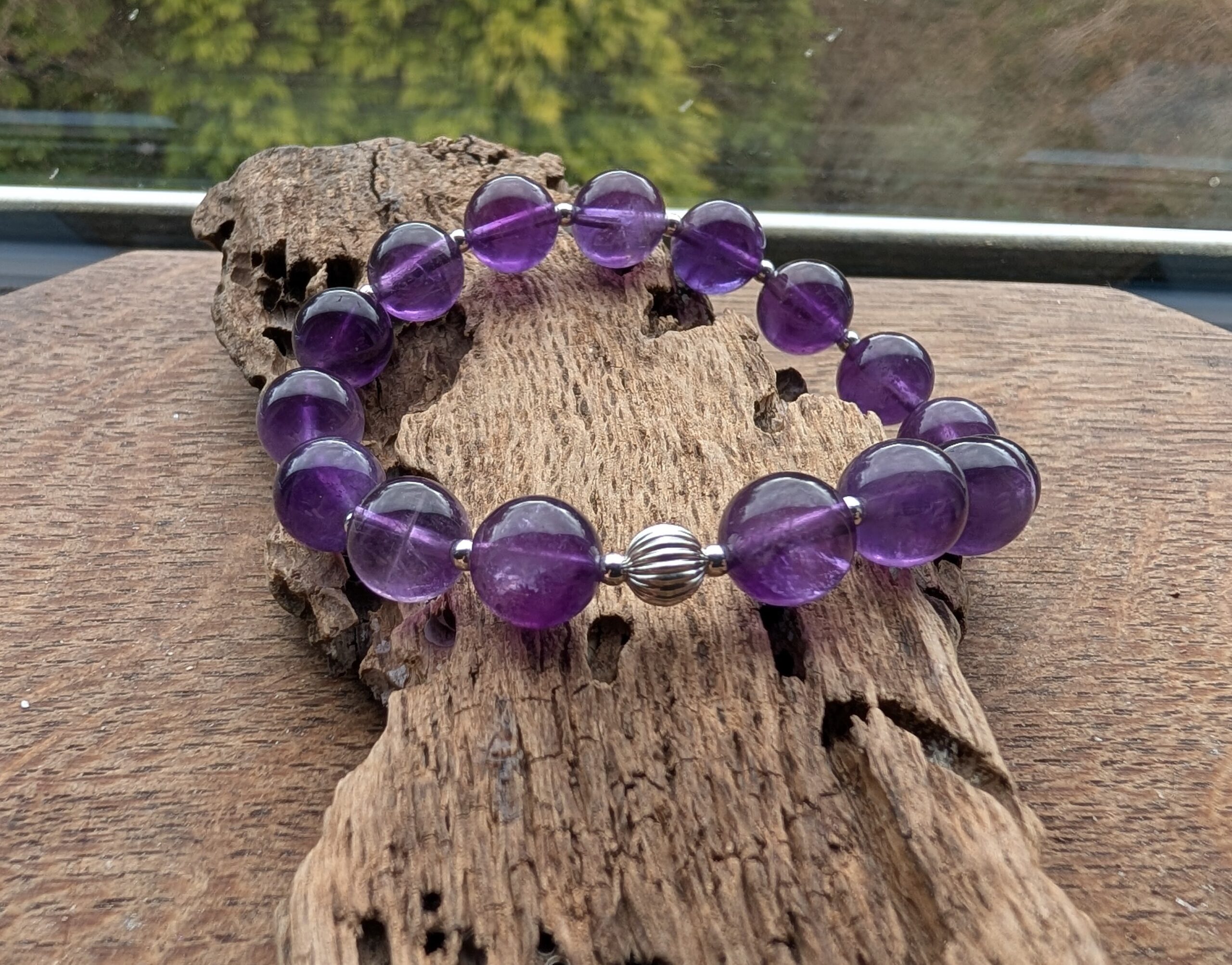
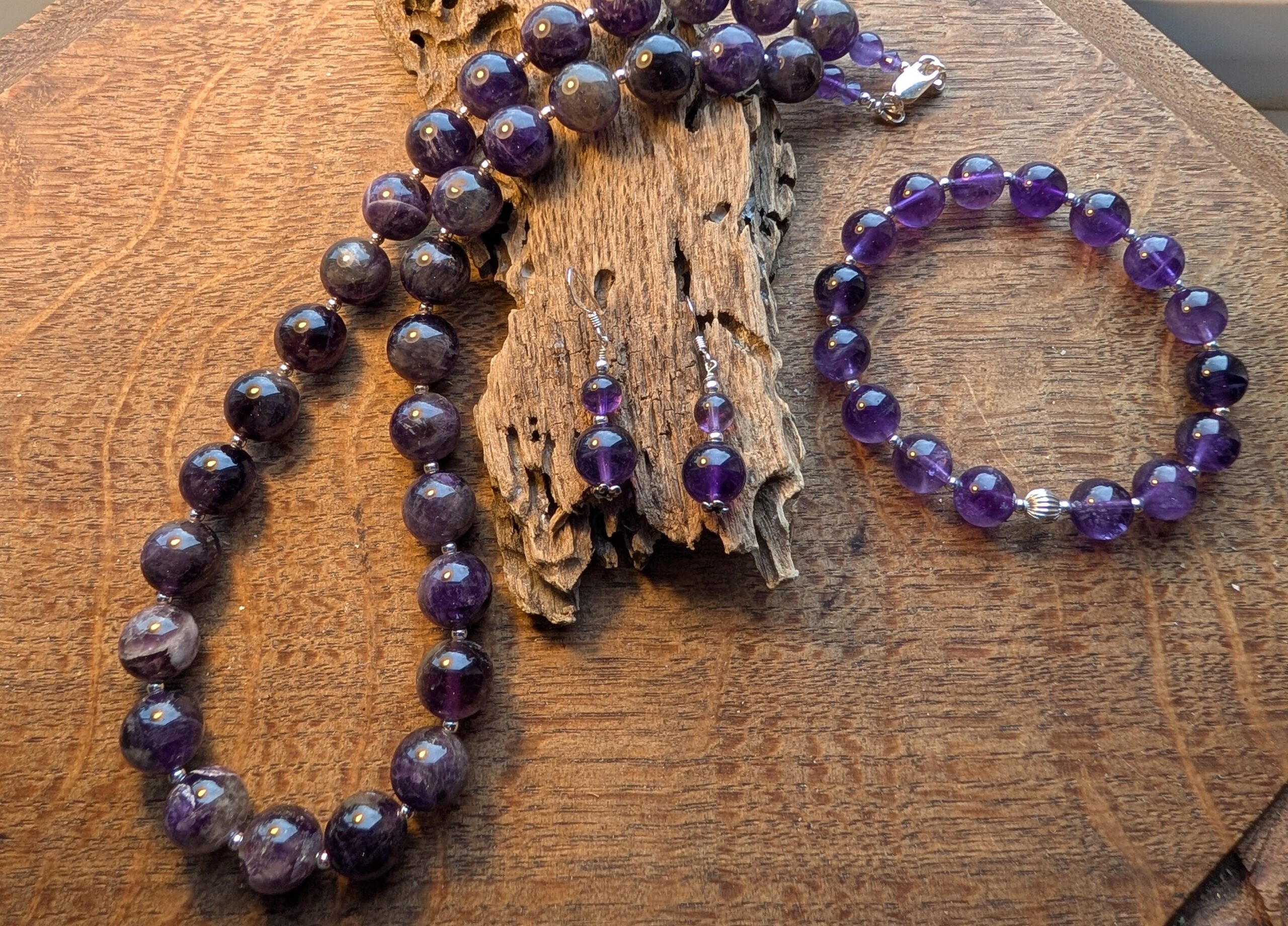

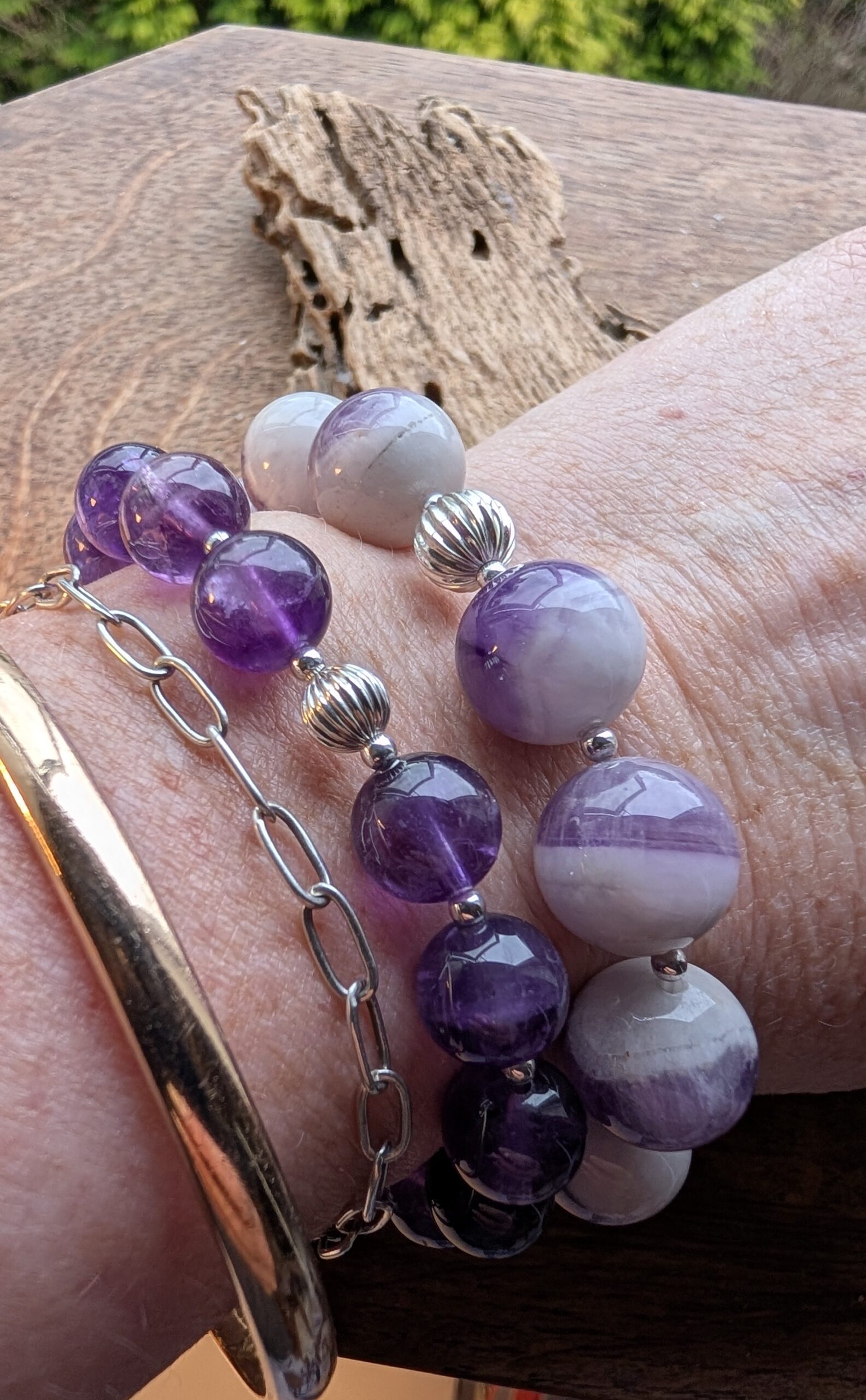
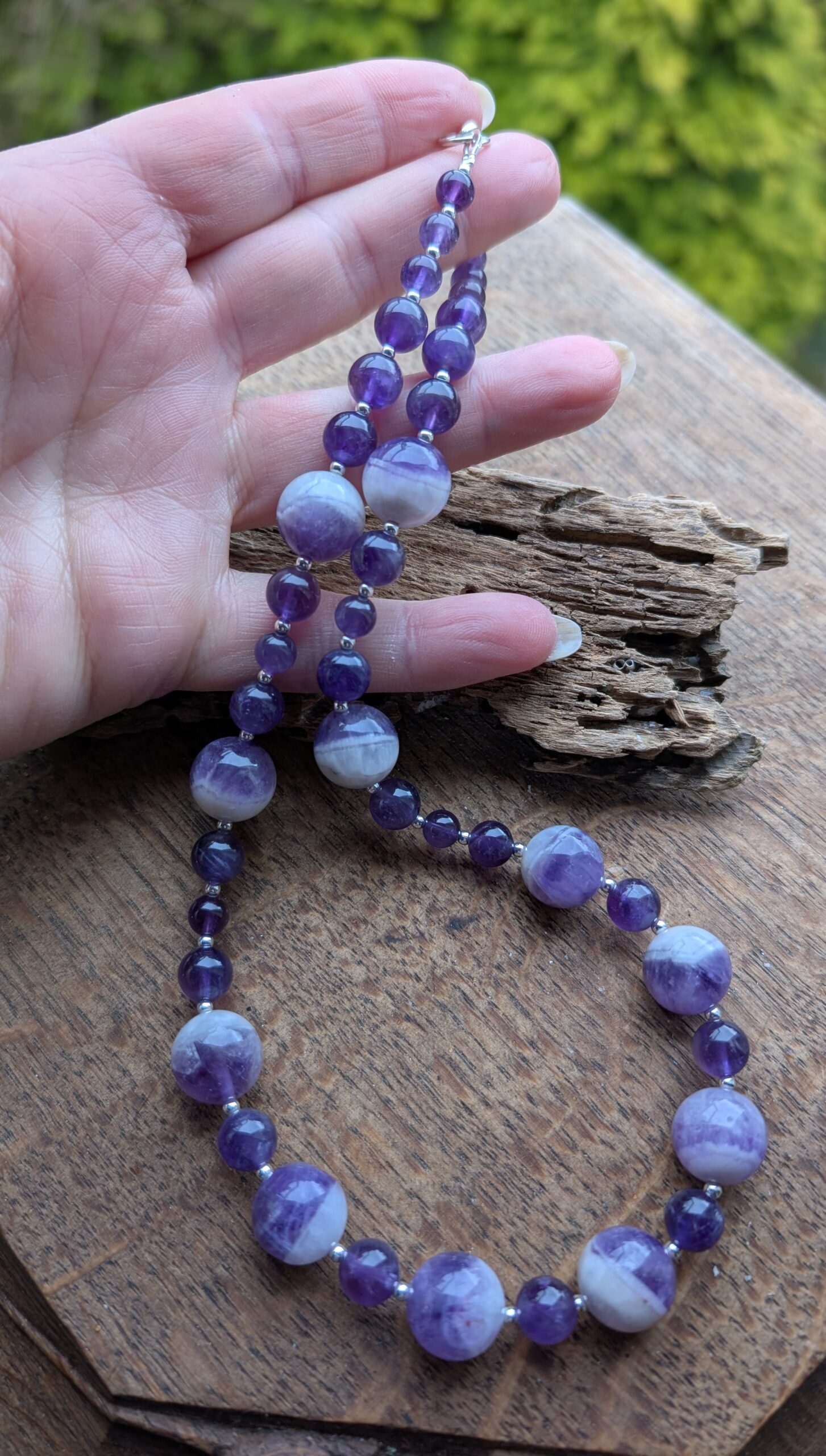


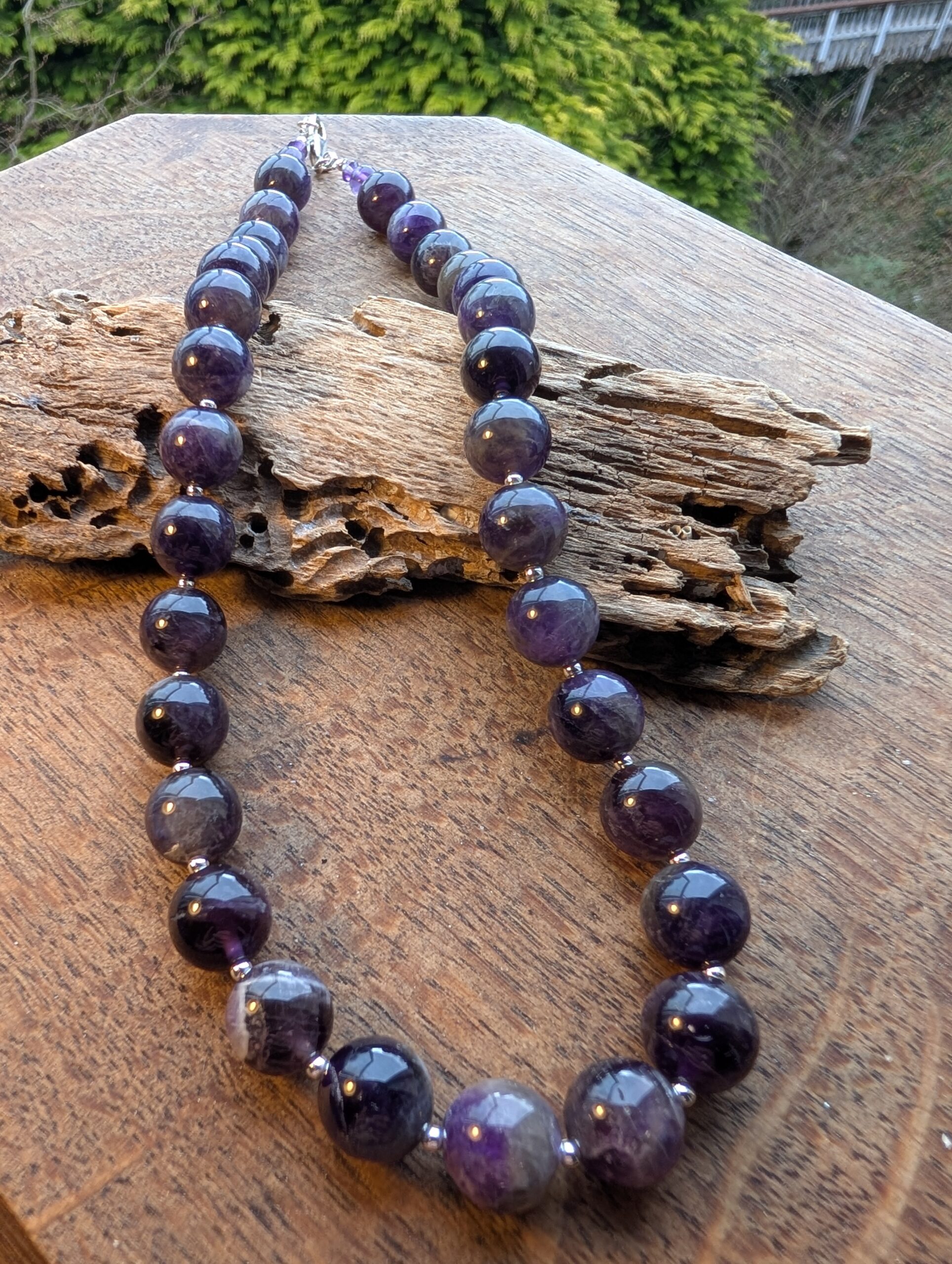


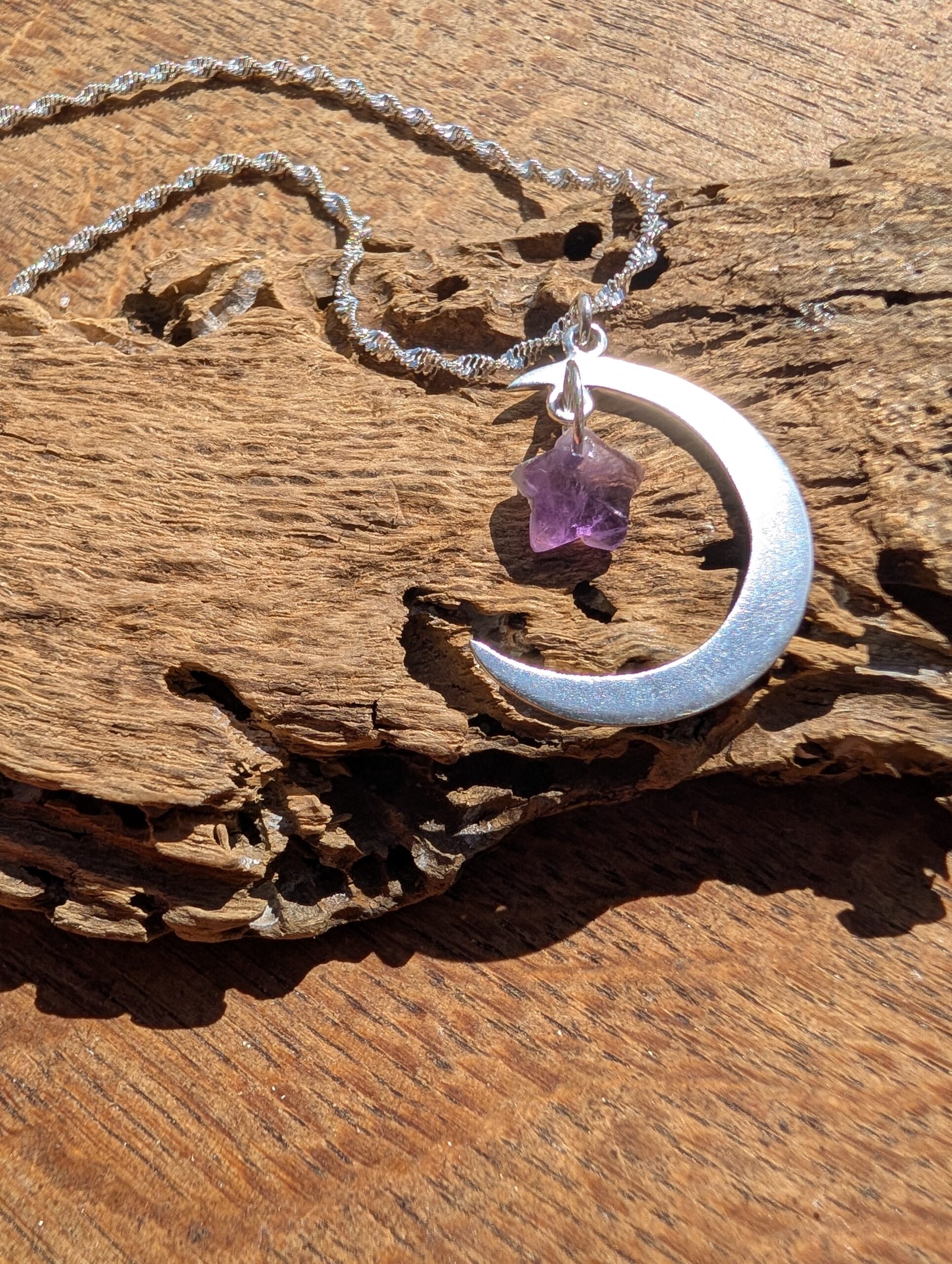
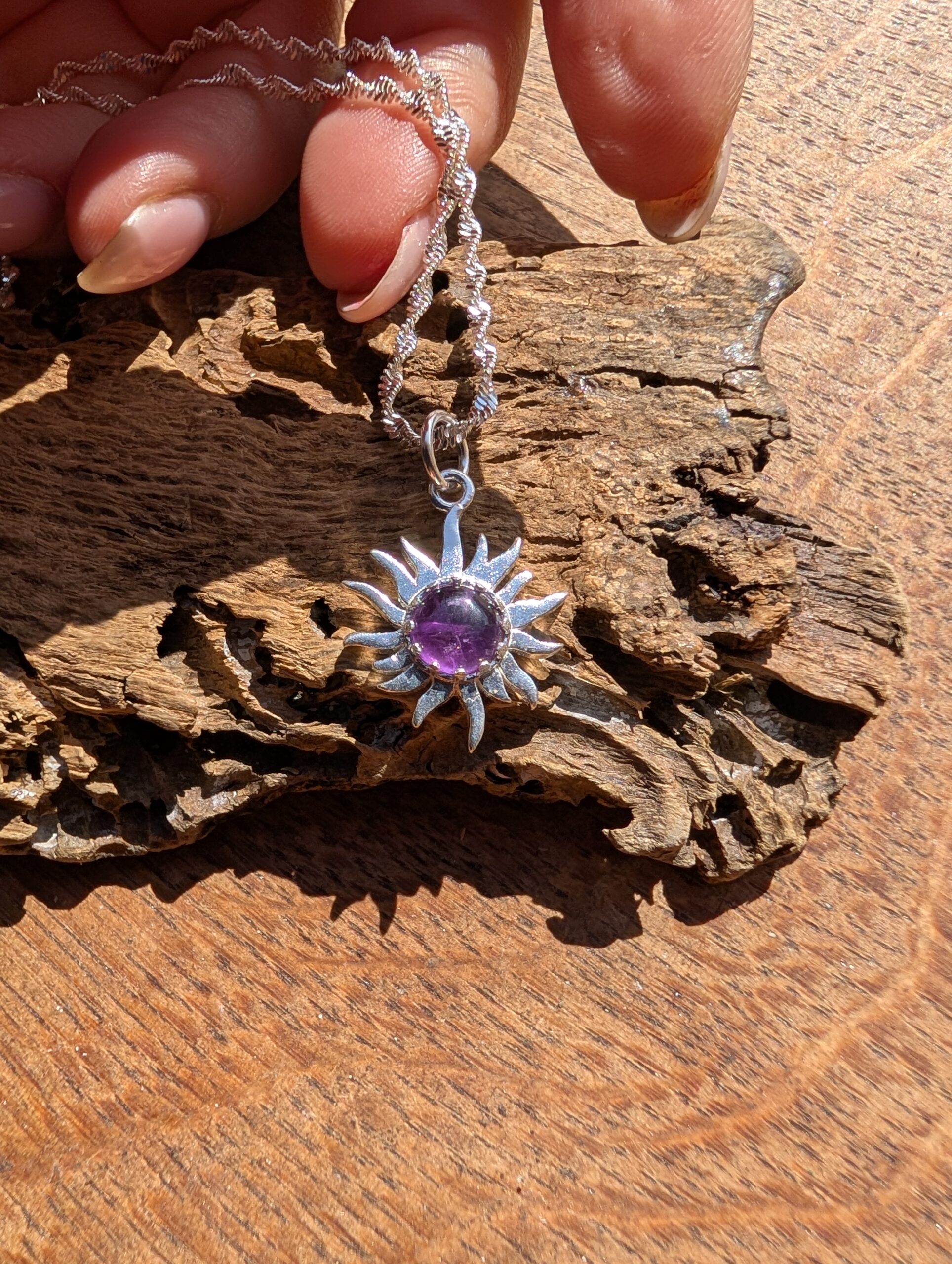

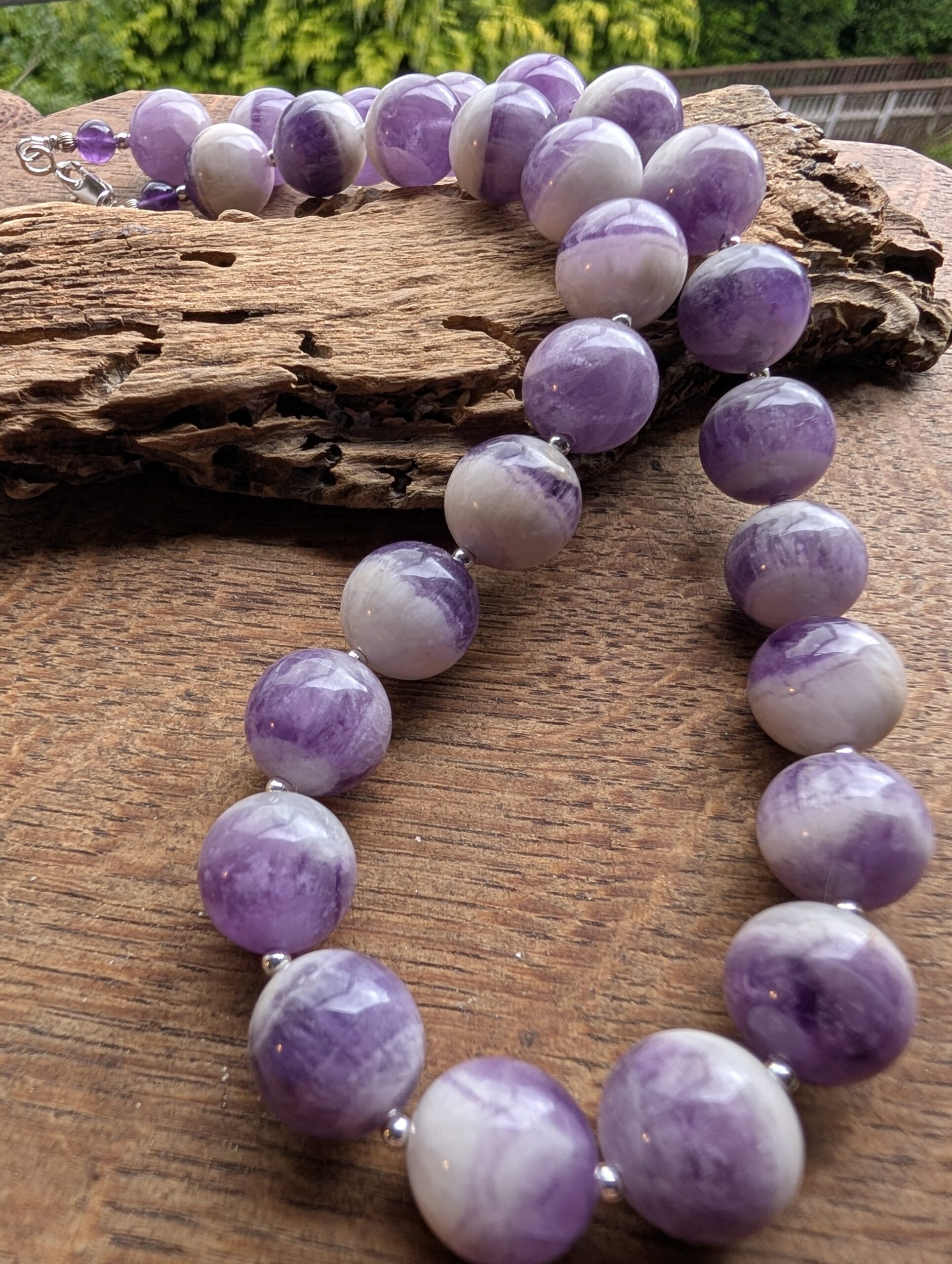
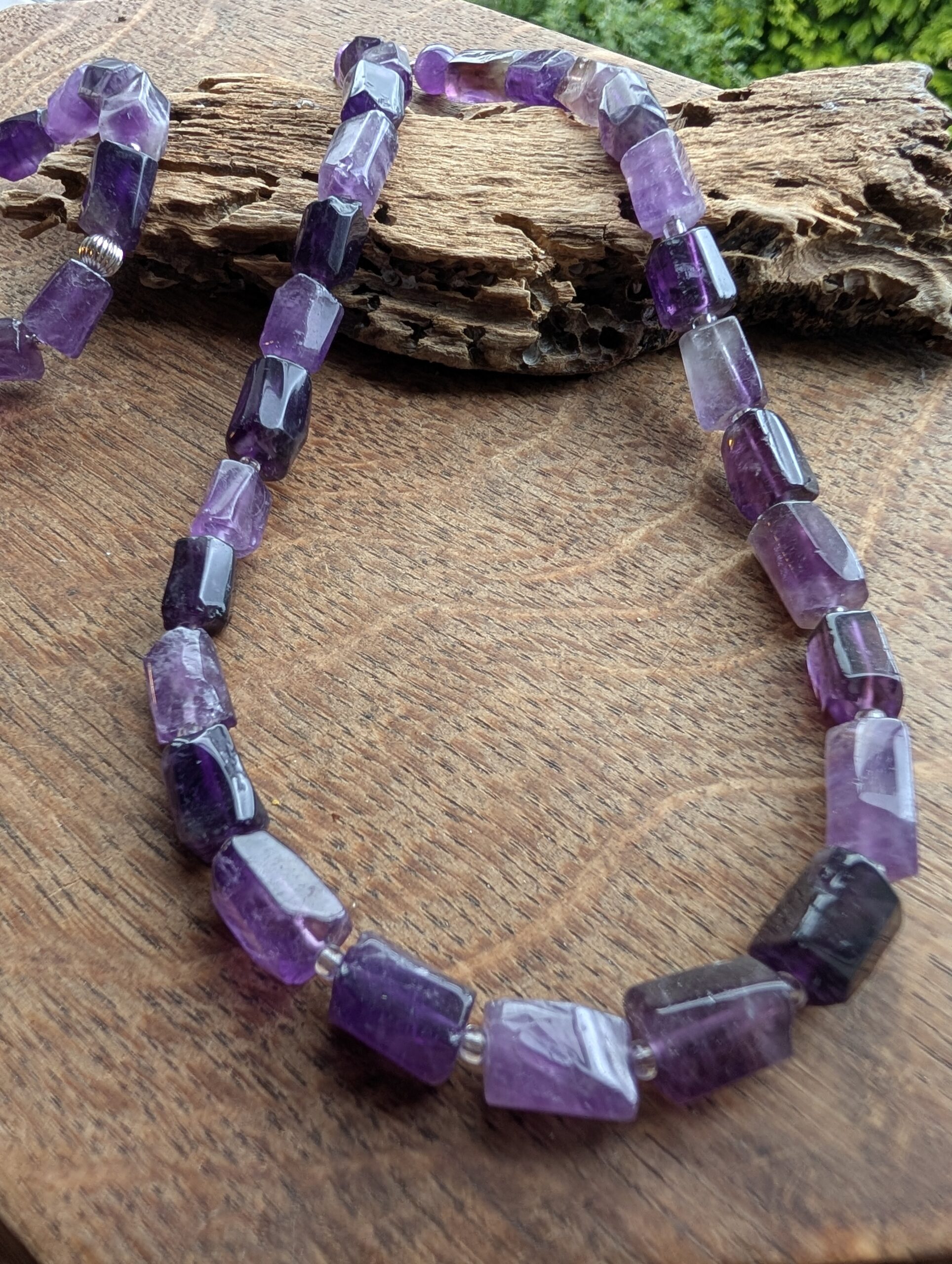
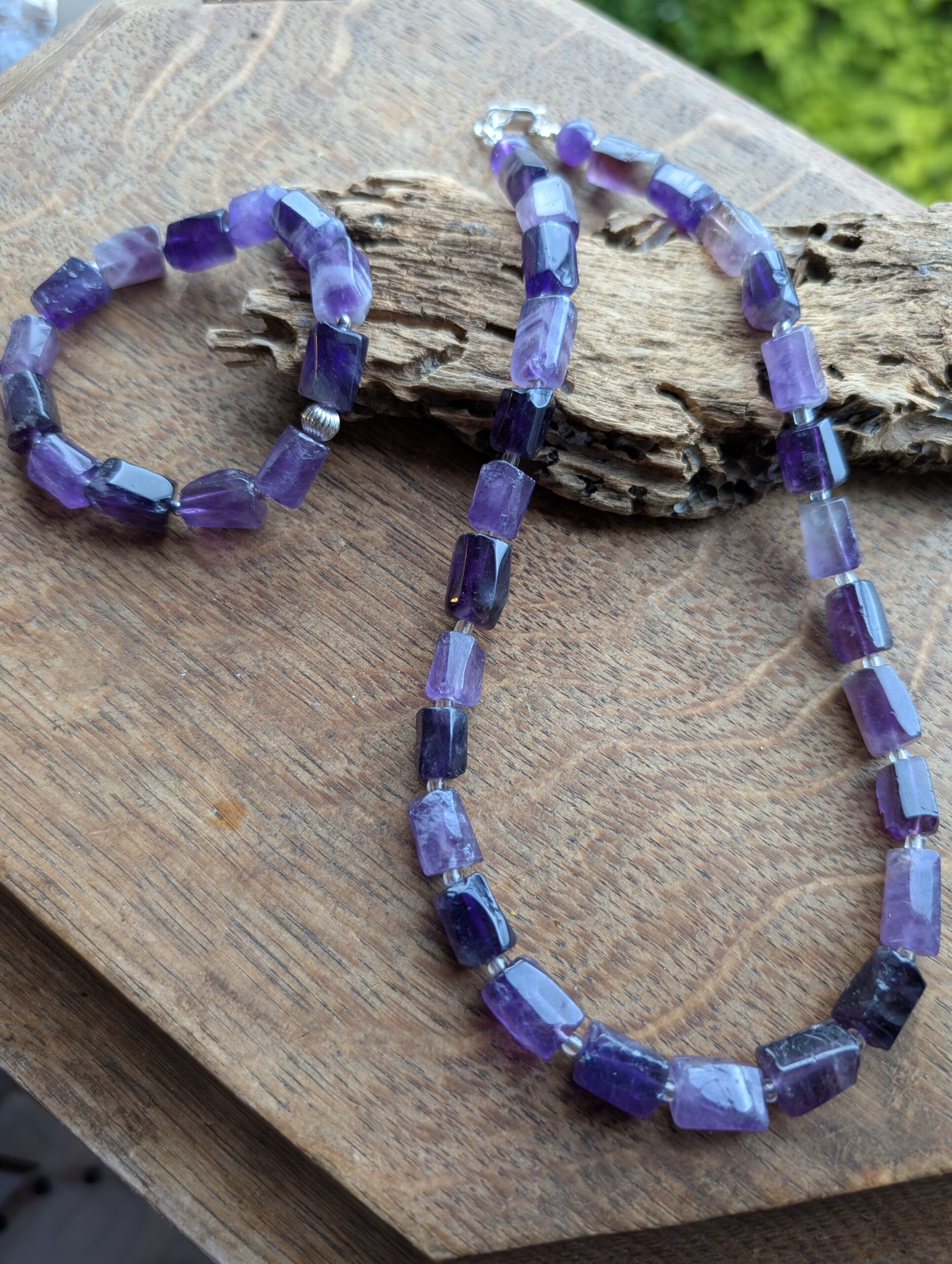

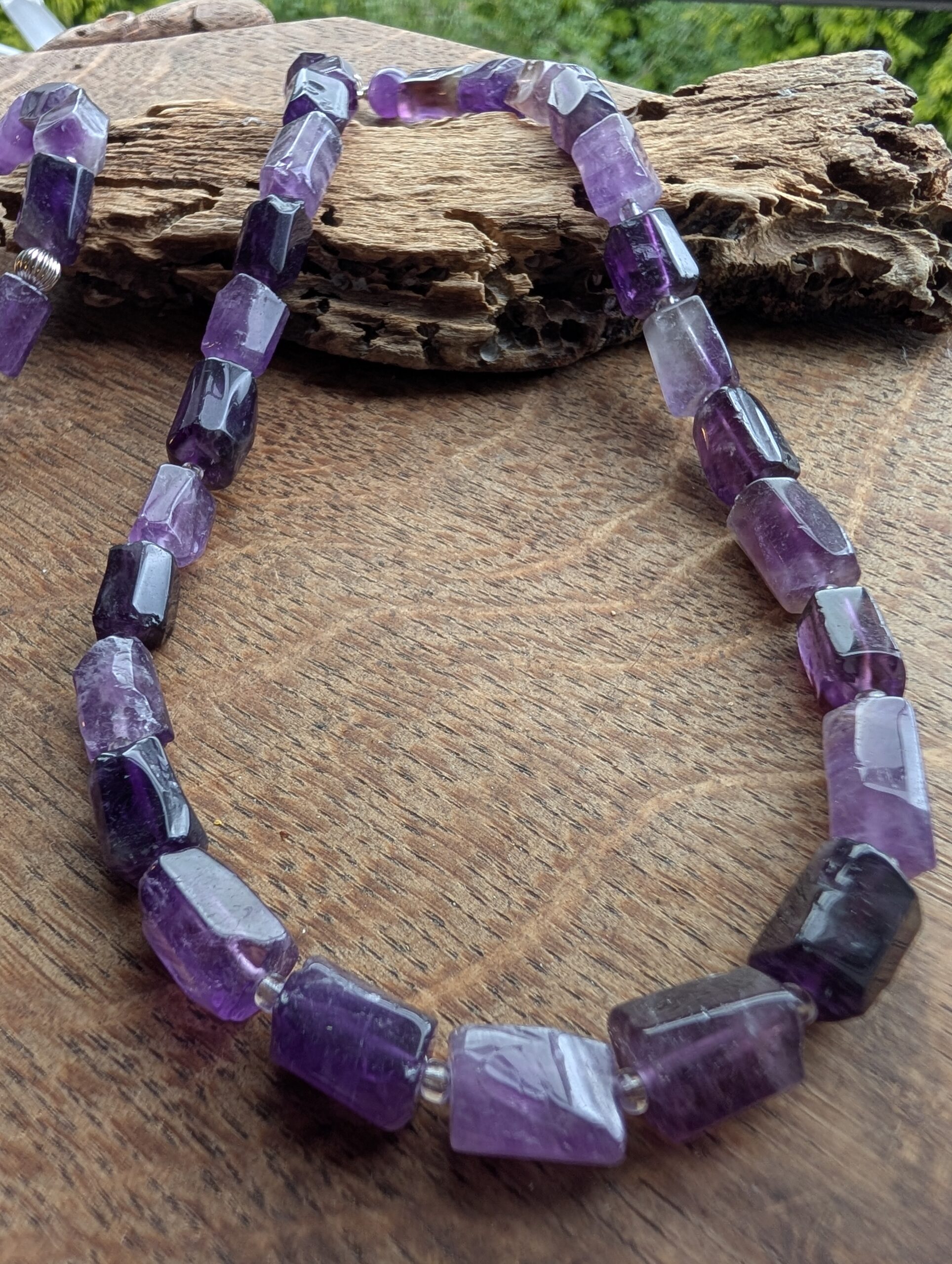
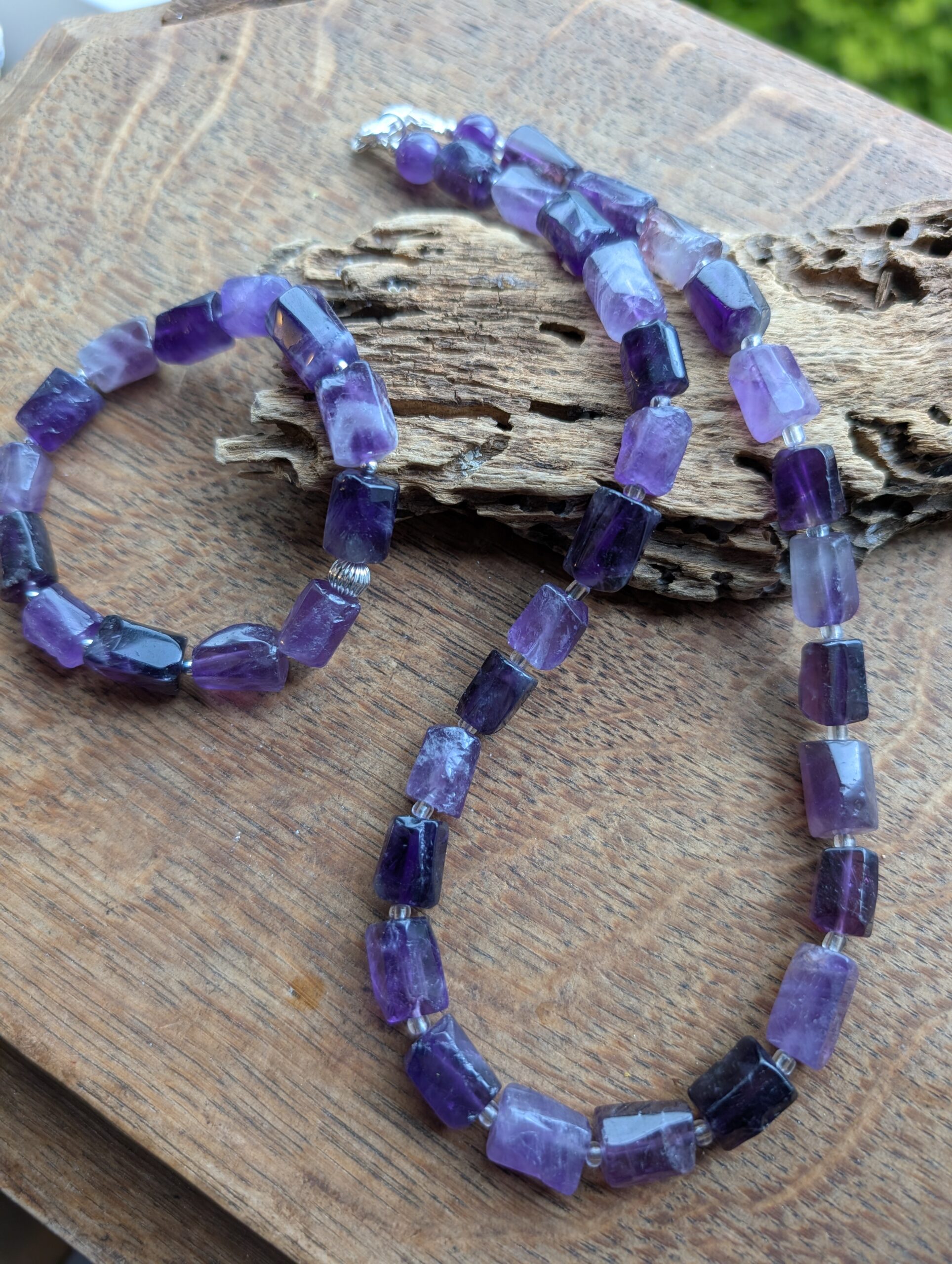

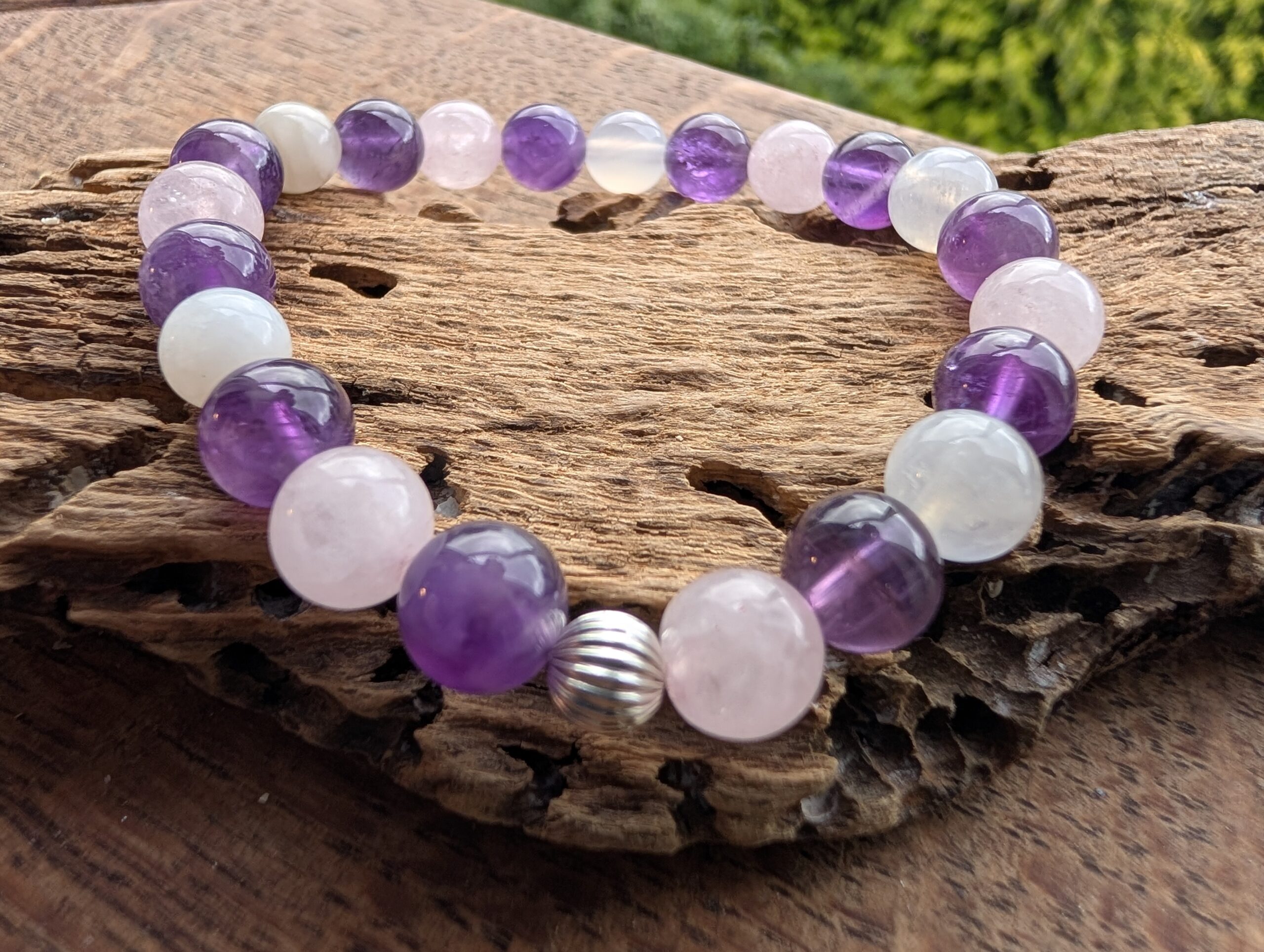
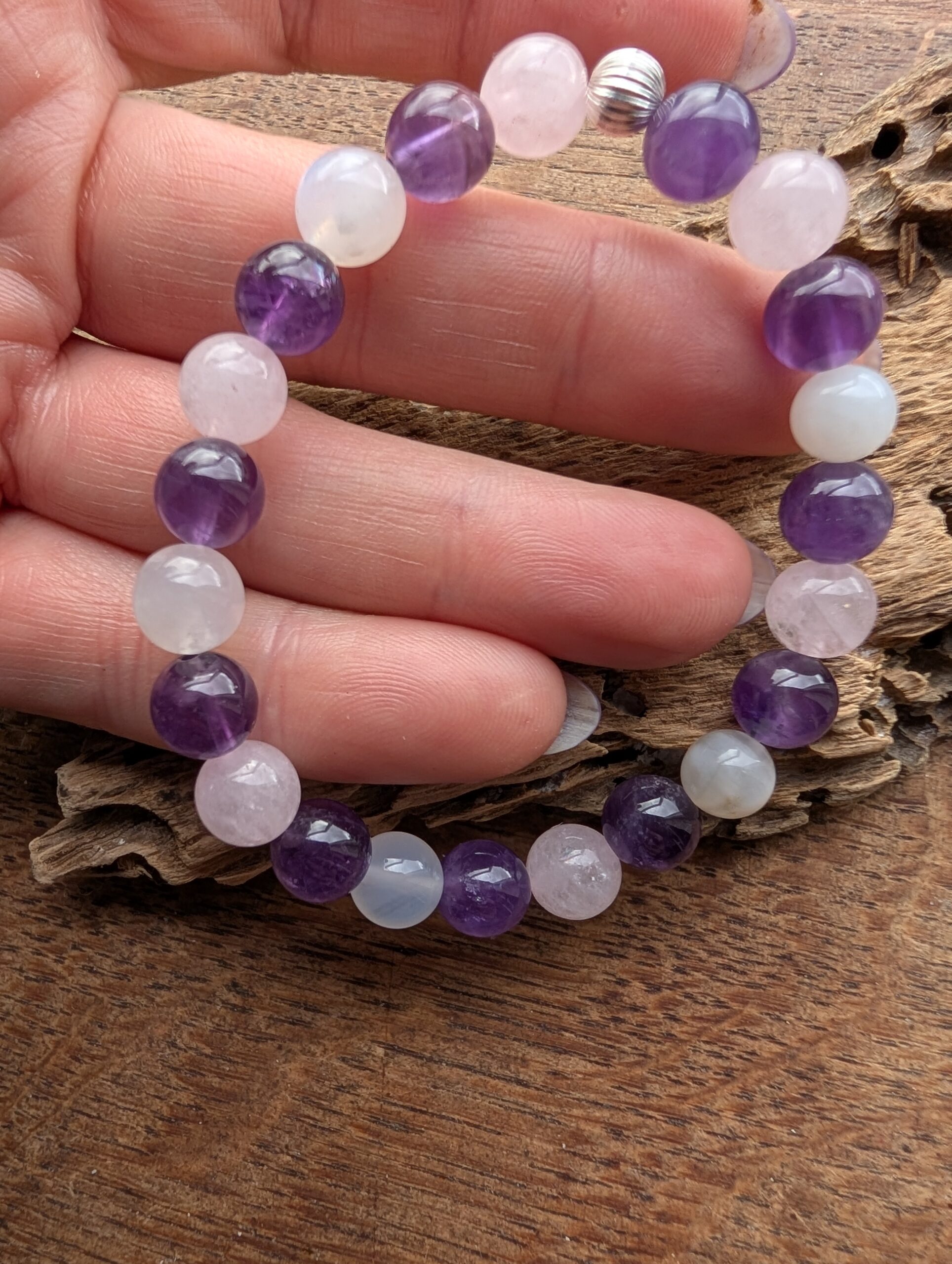


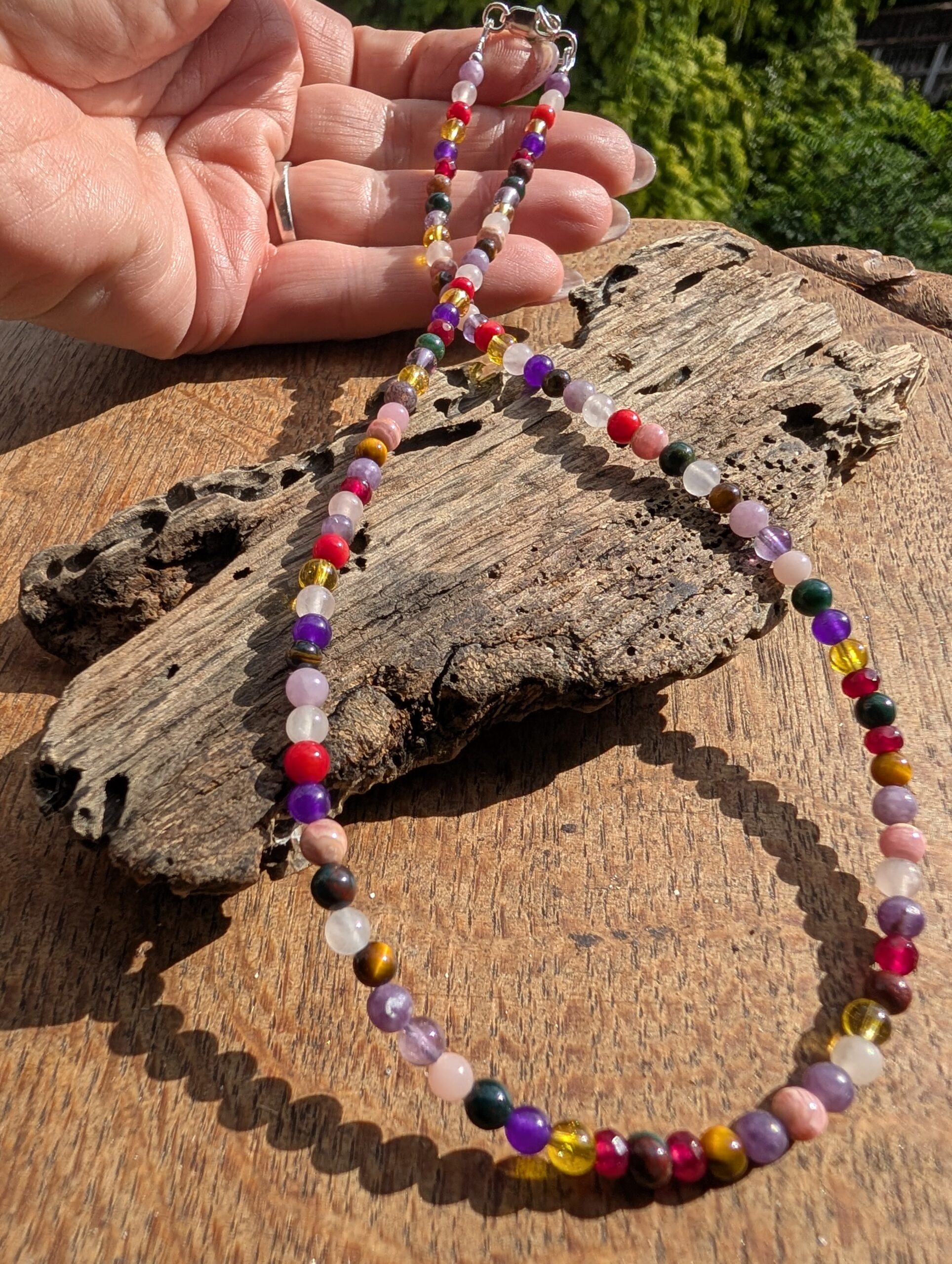
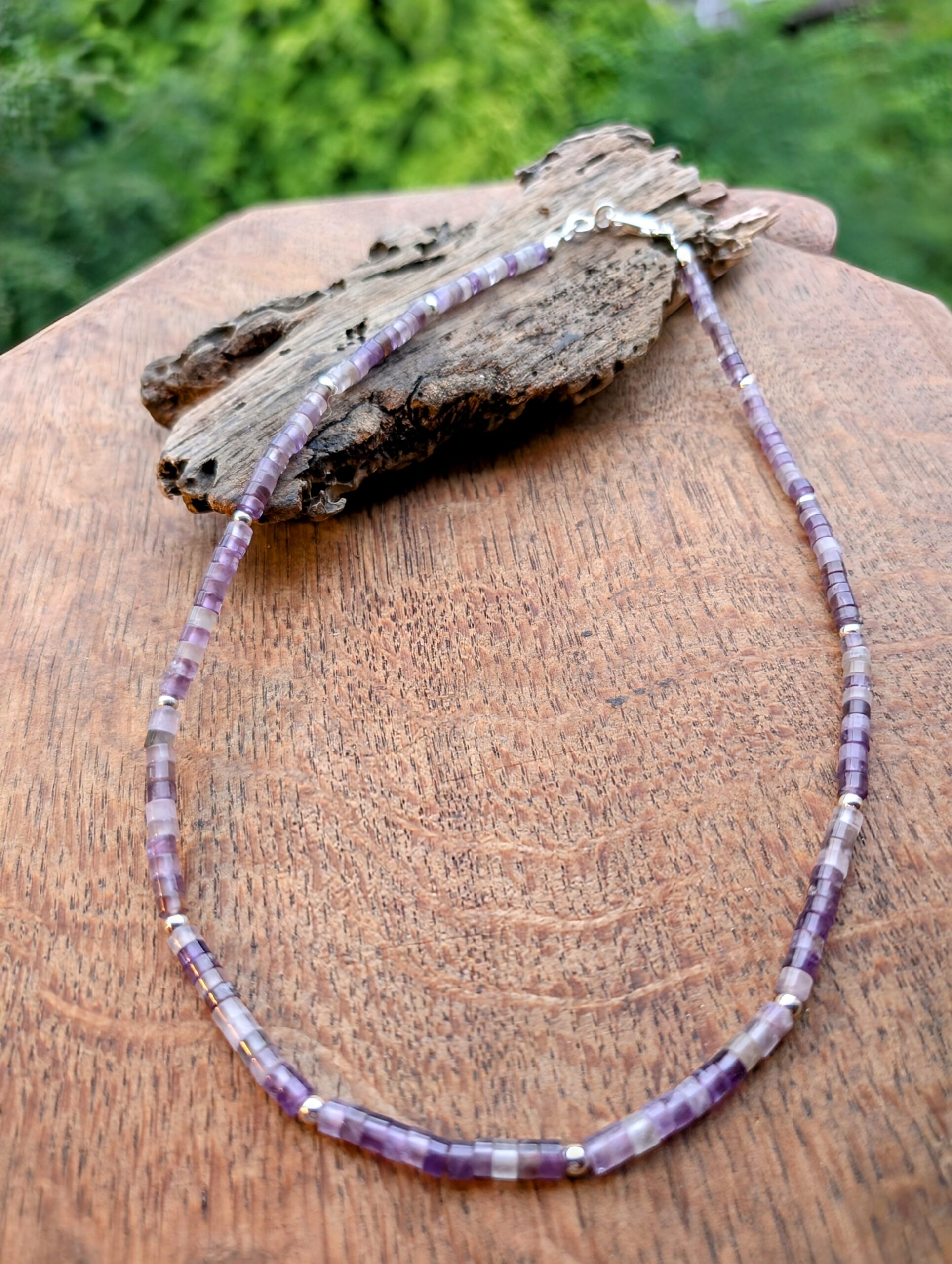
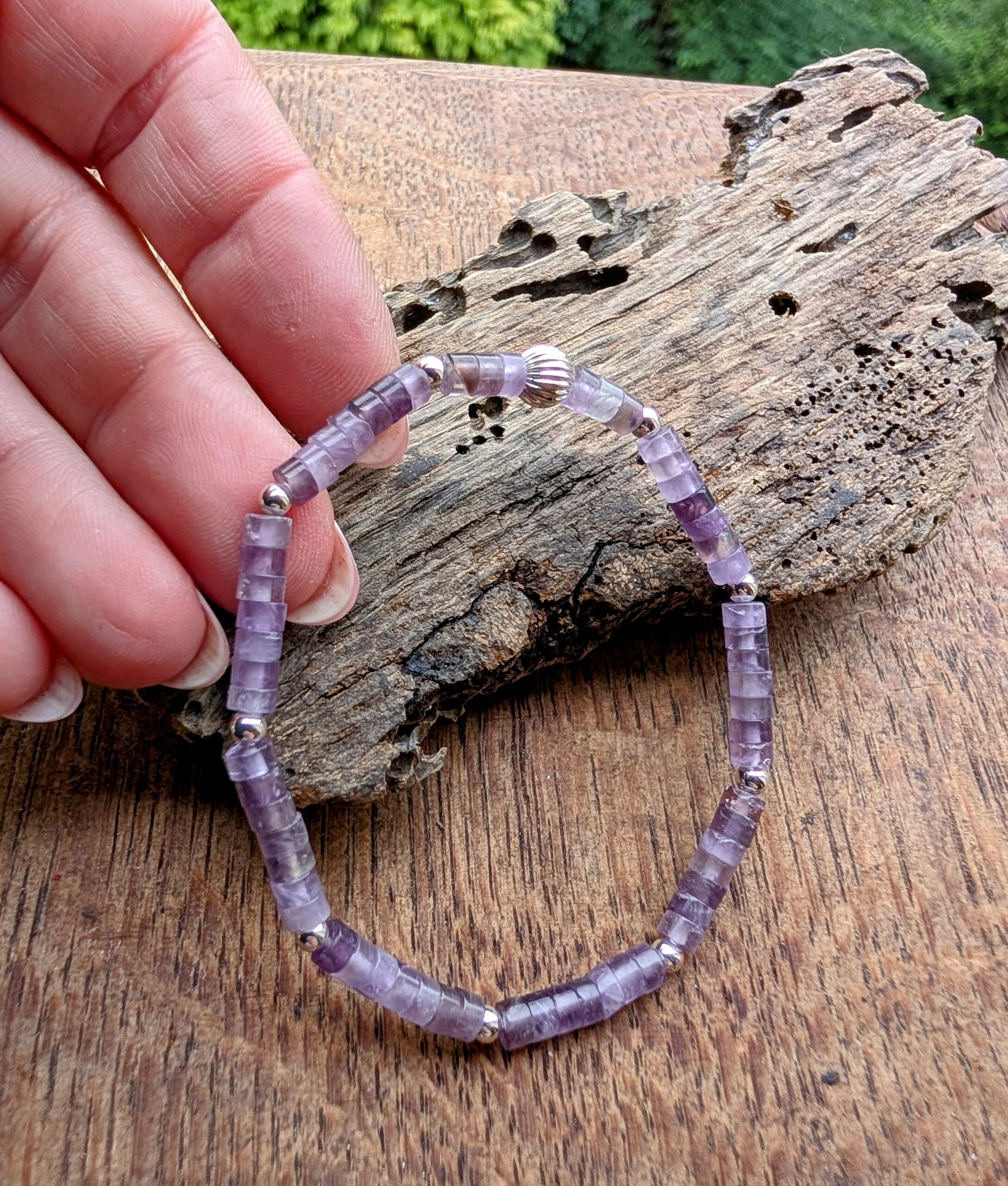


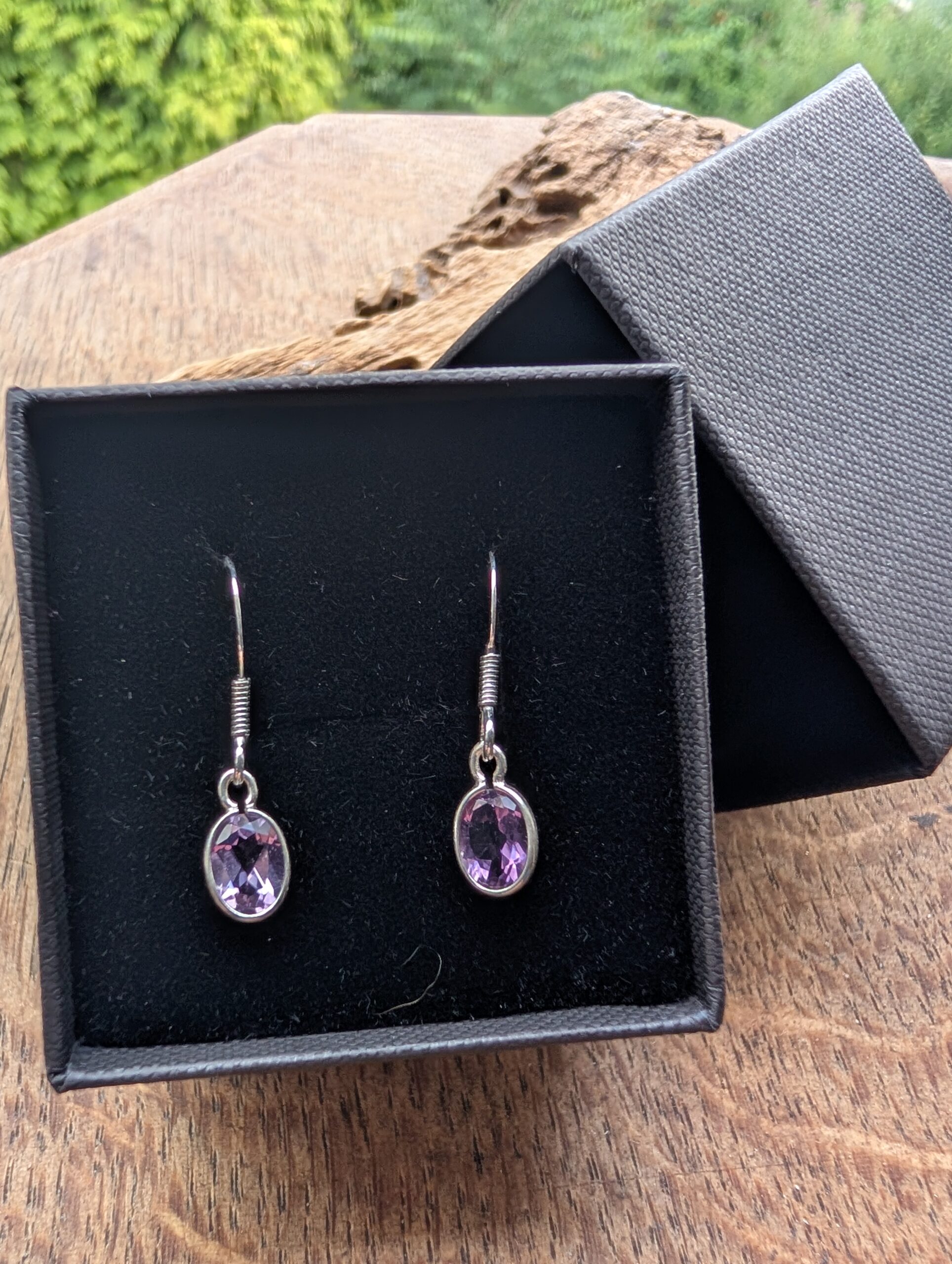
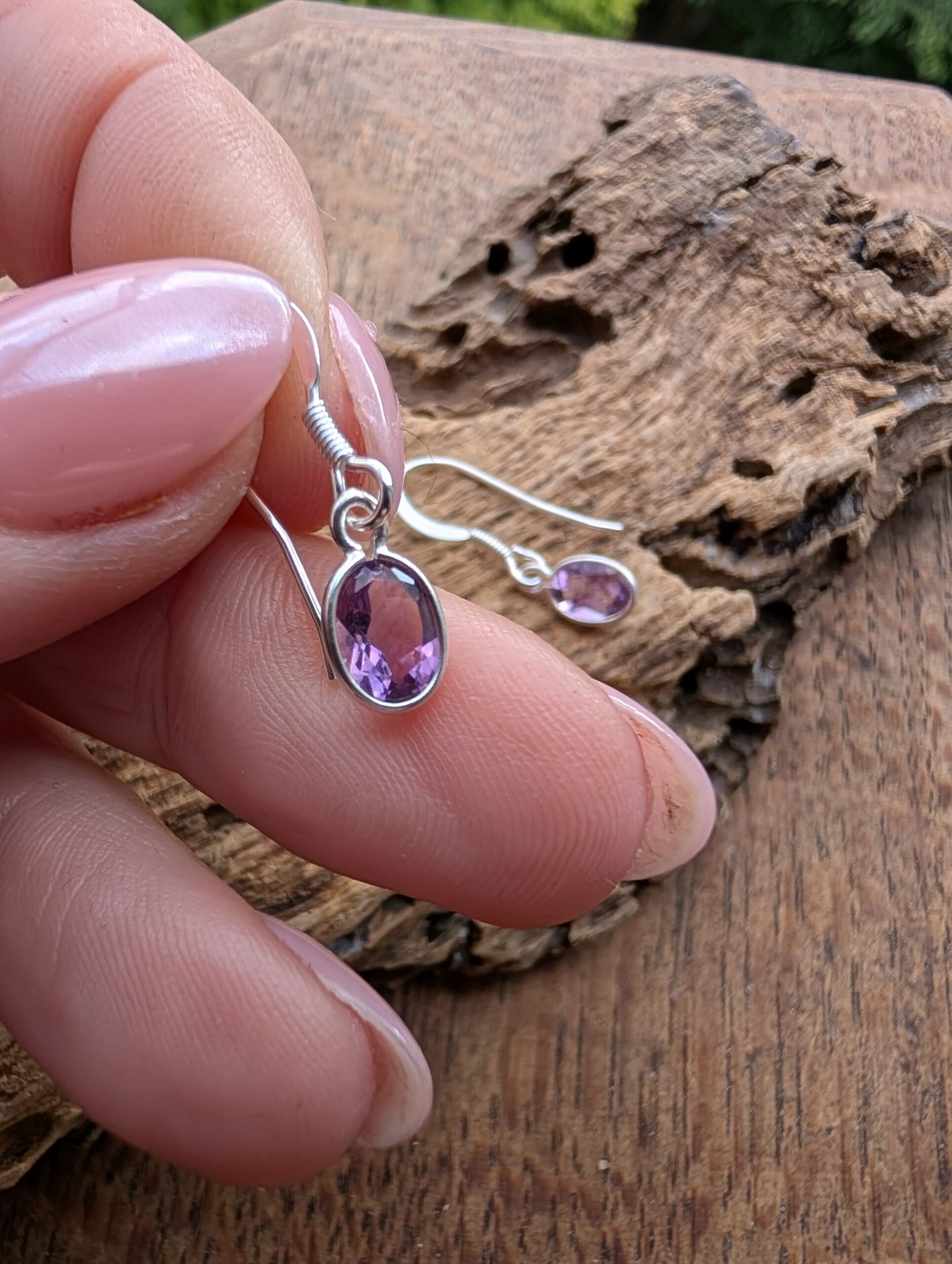

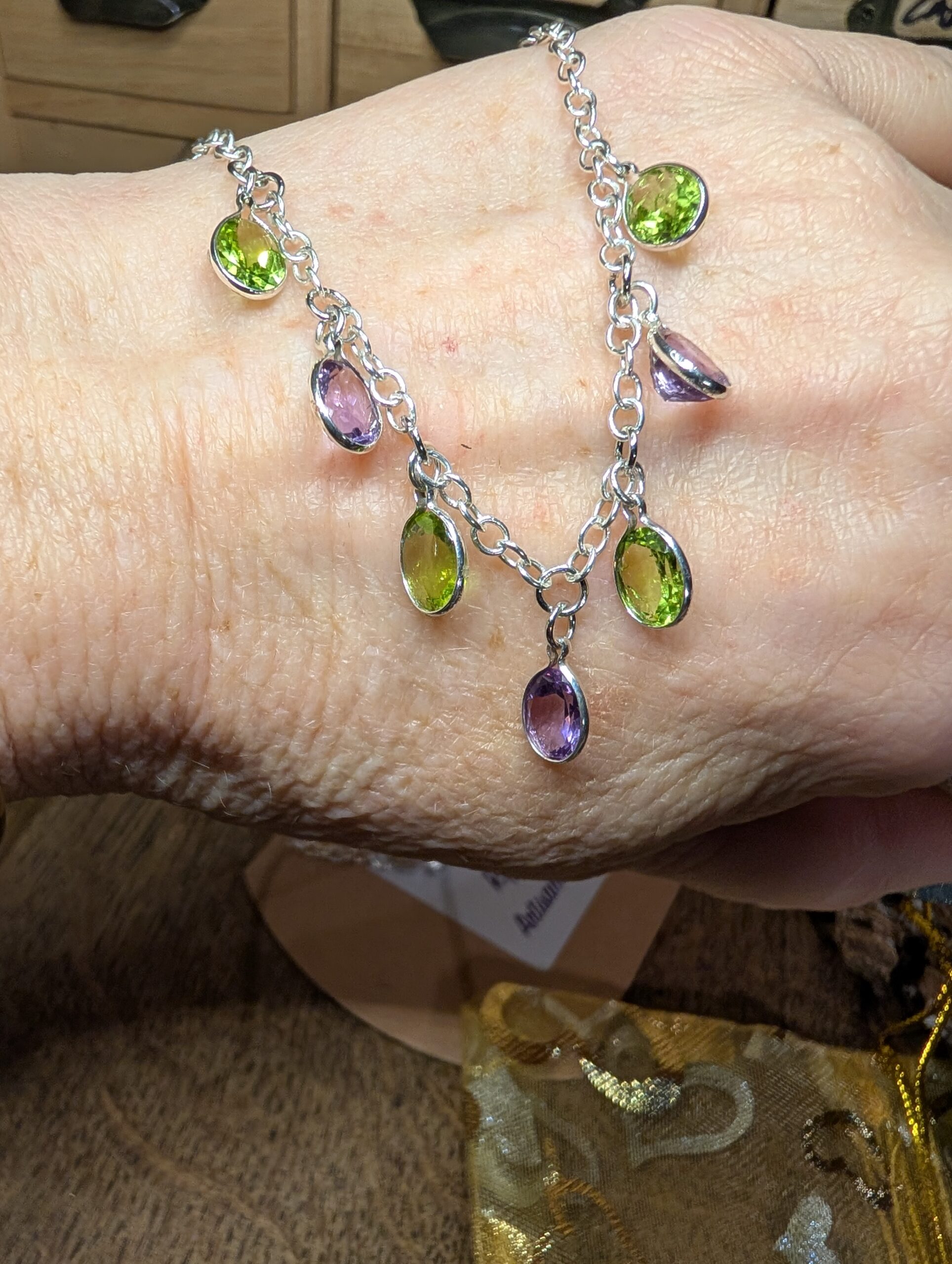

Amethyst, the serene gem of February, has long whispered of clarity, protection, and inner balance. Associated with the crown and third eye chakras, its violet hues resonate with those seeking spiritual focus and emotional insight. In this post, we journey into the symbolism and history of amethyst — exploring the stone’s calming energy and the inspiration behind Ripples of Yorkshire’s handcrafted designs.
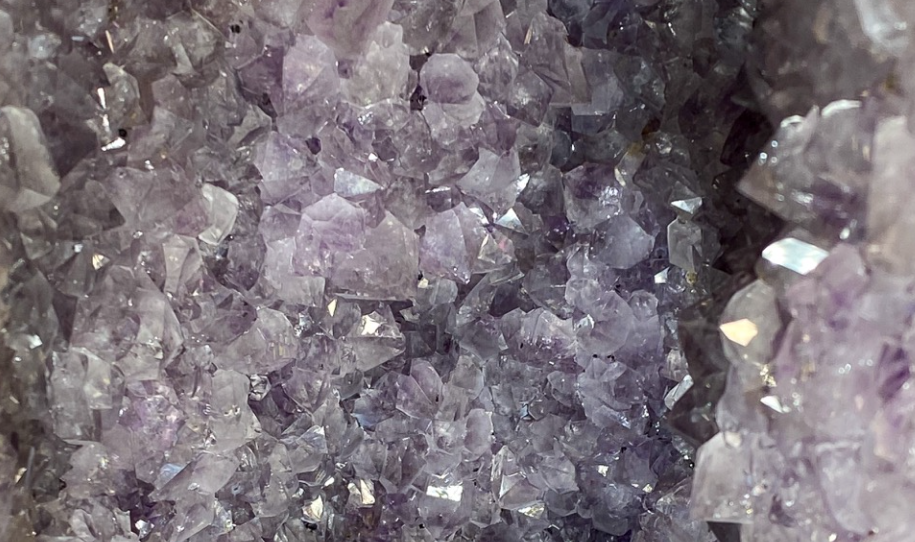
Amethyst, a type of quartz, is created through an intriguing geological process: Silica-Rich Fluids: The formation of amethyst starts with the flow of silica-rich fluids into rock cavities and fractures, often resulting from volcanic activities. Cooling and Crystallization: As these fluids cool, crystallization occurs. Trace iron impurities in the fluids impart the distinctive purple hue to amethyst.
Geode Formation: Amethyst commonly develops within geodes, which are spherical, hollow rocks with an internal lining of crystals. These geodes form from solidified gas bubbles in lava that later become filled with mineral-rich fluids. Radiation: The purple colour of amethyst can be intensified by natural radiation from nearby rocks, which affects the iron content in the crystal structure.
Historical Significance: The term “amethyst” derives from the Greek “amethystos,” which translates to “not intoxicated.” The ancient Greeks held the belief that amethysts could ward off drunkenness.
Birthstone: Designated as the birthstone for February, amethyst is believed to embody qualities such as serenity, stability, and mental clarity.
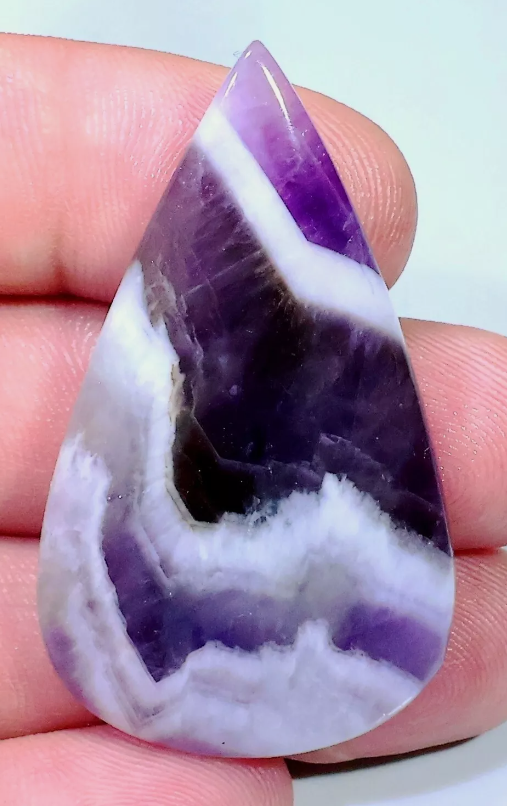
Colour Range: The colour of amethyst varies from a pale lavender to a deep violet. The most valued amethysts exhibit a deep, vibrant purple with hints of red or blue.
Global Sources: Amethyst is primarily sourced from countries including Brazil, Uruguay, Russia, South Korea, and Zambia.
Metaphysical Properties: Amethyst is thought to possess healing qualities, such as fostering tranquility, diminishing stress, and increasing spiritual consciousness.
Durability: Amethyst is relatively durable, scoring a 7 on the Mohs scale, making it appropriate for a wide range of jewellery pieces.
Famous Amethysts: Renowned amethysts include the “Empress of Uruguay,” an enormous geode over 11 feet tall, and the “Delhi Purple Sapphire,” which, despite its name, is an amethyst rumoured to be cursed.
Explore handcrafted jewellery at: Amethyst | Ripples of Yorkshire
Amethyst Birthstones for February