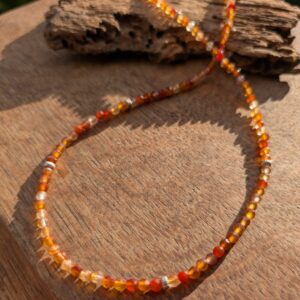
Iolite Gemstone: The Indigo Gemstone of Navigation, Geology, and Inner Vision
✧ What Makes Iolite So Unique?
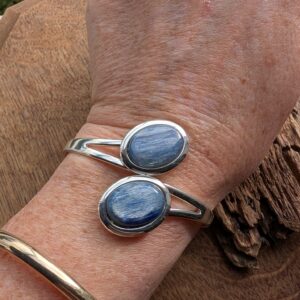
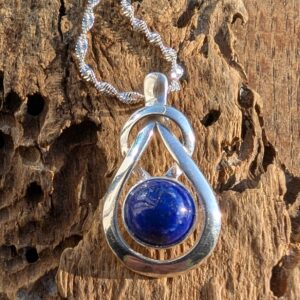
Iolite is one of those gemstones that quietly surprises people. Its deep indigo colour catches the eye, yet its story runs far deeper than its beauty. This mineral belongs to the cordierite family and forms in metamorphic rocks that have undergone intense heat and pressure. Because of this, Iolite often appears in ancient geological environments where the Earth reshaped itself over hundreds of millions of years. Many deposits date back to the Precambrian era, which means these crystals began forming long before complex life appeared on land.
✧ The Geology of Iolite Gemstone: Heat, Pressure, and Ancient Landscapes
Iolite develops when aluminium‑rich rocks meet the right combination of temperature and pressure. As the minerals inside these rocks reorganise, cordierite crystals begin to grow. Over time, these crystals take on their characteristic violet‑blue colour. The presence of iron and magnesium influences the final shade, which is why Iolite can shift from grey‑blue to deep indigo.
One of the most fascinating scientific features of Iolite is its pleochroism. This means the gemstone shows different colours depending on the angle of the light. When you turn an Iolite stone, you may see violet, blue, or even a soft honey‑yellow. This optical effect occurs because of the way light interacts with the crystal structure, and it makes Iolite one of the most visually dynamic gemstones in the natural world.
If you enjoy learning about responsible sourcing, you can explore ethical mining practices at the Responsible Mining Foundation: https://www.responsibleminingfoundation.org
✧ Iolite Gemstone in History: The Viking’s Compass
Iolite’s pleochroism once served a practical purpose. According to historical accounts, early navigators — including Viking sailors — used thin slices of Iolite as a natural polarising filter. Even on cloudy days, the stone helped them locate the sun’s position, which allowed them to steer their ships with confidence. Because of this, Iolite earned the nickname “The Viking’s Compass.”
This connection to navigation still influences the way people interpret the stone today. Many see it as a symbol of direction, clarity, and the ability to move forward with purpose.
✧ Crystal Healing: A Stone of Inner Guidance and Calm
In crystal healing traditions, Iolite supports intuition and inner vision. Many people use it when they want to reconnect with their own sense of direction or when they feel ready to make a meaningful change. The stone’s calming energy encourages balance, especially during times of transition.
Practitioners often associate Iolite with the third eye chakra, which links to insight, clarity, and self‑trust. Because of this, the gemstone is a popular choice for meditation, journaling, and personal reflection.
✧ Folklore and Symbolism: A Gift of Trust and Safe Passage
Throughout history, people have gifted Iolite to travellers as a symbol of safe passage. The stone represents trust, guidance, and the hope that the wearer will always find their way — both physically and emotionally. Earrings made with Iolite sit close to the senses, which makes them a thoughtful way to offer encouragement or support.
In many traditions, giving Iolite jewellery expresses a wish for clarity, courage, and calm movement forward. Whether chosen for oneself or gifted to someone special, the stone carries a message of steady navigation through life’s shifting tides.
Check out our Iolite Jewellery Click Here